Header And Logo

|

#include "postgres_fe.h"#include <fcntl.h>#include <sys/stat.h>#include <time.h>#include "pgtz.h"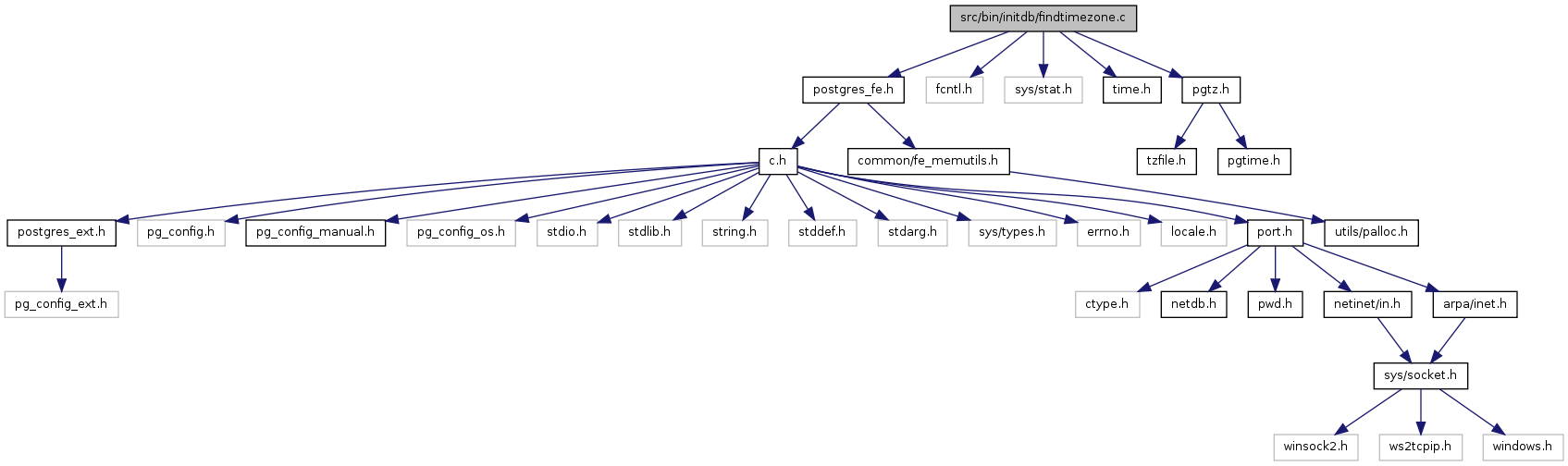
Go to the source code of this file.
Data Structures | |
| struct | tztry |
Defines | |
| #define | T_DAY ((time_t) (60*60*24)) |
| #define | T_WEEK ((time_t) (60*60*24*7)) |
| #define | T_MONTH ((time_t) (60*60*24*31)) |
| #define | MAX_TEST_TIMES (52*100) |
Functions | |
| const char * | select_default_timezone (const char *share_path) |
| static const char * | pg_TZDIR (void) |
| int | pg_open_tzfile (const char *name, char *canonname) |
| static pg_tz * | pg_load_tz (const char *name) |
| static void | scan_available_timezones (char *tzdir, char *tzdirsub, struct tztry *tt, int *bestscore, char *bestzonename) |
| static int | get_timezone_offset (struct tm *tm) |
| static time_t | build_time_t (int year, int month, int day) |
| static bool | compare_tm (struct tm *s, struct pg_tm *p) |
| static int | score_timezone (const char *tzname, struct tztry *tt) |
| static const char * | identify_system_timezone (void) |
| static bool | validate_zone (const char *tzname) |
Variables | |
| static char | tzdirpath [MAXPGPATH] |
| #define MAX_TEST_TIMES (52*100) |
Definition at line 145 of file findtimezone.c.
Referenced by identify_system_timezone().
| #define T_DAY ((time_t) (60*60*24)) |
Definition at line 141 of file findtimezone.c.
| #define T_MONTH ((time_t) (60*60*24*31)) |
Definition at line 143 of file findtimezone.c.
Referenced by identify_system_timezone().
| #define T_WEEK ((time_t) (60*60*24*7)) |
Definition at line 142 of file findtimezone.c.
| static time_t build_time_t | ( | int | year, | |
| int | month, | |||
| int | day | |||
| ) | [static] |
Definition at line 193 of file findtimezone.c.
References pg_tm::tm_hour, pg_tm::tm_isdst, pg_tm::tm_mday, pg_tm::tm_min, pg_tm::tm_mon, pg_tm::tm_sec, pg_tm::tm_wday, pg_tm::tm_yday, and pg_tm::tm_year.
Referenced by score_timezone().
| static int get_timezone_offset | ( | struct tm * | tm | ) | [static] |
Definition at line 162 of file findtimezone.c.
Referenced by identify_system_timezone().
| static const char* identify_system_timezone | ( | void | ) | [static] |
Definition at line 310 of file findtimezone.c.
References build_time_t(), get_timezone_offset(), MAX_TEST_TIMES, tztry::n_test_times, NULL, pg_TZDIR(), scan_available_timezones(), score_timezone(), snprintf(), T_MONTH, tztry::test_times, tm, and TZ_STRLEN_MAX.
Referenced by select_default_timezone().
{
    static char resultbuf[TZ_STRLEN_MAX + 1];
    time_t      tnow;
    time_t      t;
    struct tztry tt;
    struct tm  *tm;
    int         thisyear;
    int         bestscore;
    char        tmptzdir[MAXPGPATH];
    int         std_ofs;
    char        std_zone_name[TZ_STRLEN_MAX + 1],
                dst_zone_name[TZ_STRLEN_MAX + 1];
    char        cbuf[TZ_STRLEN_MAX + 1];

    /* Initialize OS timezone library */
    tzset();

    /*
     * Set up the list of dates to be probed to see how well our timezone
     * matches the system zone.  We first probe January and July of the
     * current year; this serves to quickly eliminate the vast majority of the
     * TZ database entries.  If those dates match, we probe every week for 100
     * years backwards from the current July.  (Weekly resolution is good
     * enough to identify DST transition rules, since everybody switches on
     * Sundays.)  This is sufficient to cover most of the Unix time_t range,
     * and we don't want to look further than that since many systems won't
     * have sane TZ behavior further back anyway.  The further back the zone
     * matches, the better we score it.  This may seem like a rather random
     * way of doing things, but experience has shown that system-supplied
     * timezone definitions are likely to have DST behavior that is right for
     * the recent past and not so accurate further back. Scoring in this way
     * allows us to recognize zones that have some commonality with the Olson
     * database, without insisting on exact match. (Note: we probe Thursdays,
     * not Sundays, to avoid triggering DST-transition bugs in localtime
     * itself.)
     */
    tnow = time(NULL);
    tm = localtime(&tnow);
    if (!tm)
        return NULL;            /* give up if localtime is broken... */
    thisyear = tm->tm_year + 1900;

    t = build_time_t(thisyear, 1, 15);

    /*
     * Round back to GMT midnight Thursday.  This depends on the knowledge
     * that the time_t origin is Thu Jan 01 1970.  (With a different origin
     * we'd be probing some other day of the week, but it wouldn't matter
     * anyway unless localtime() had DST-transition bugs.)
     */
    t -= (t % T_WEEK);

    tt.n_test_times = 0;
    tt.test_times[tt.n_test_times++] = t;

    t = build_time_t(thisyear, 7, 15);
    t -= (t % T_WEEK);

    tt.test_times[tt.n_test_times++] = t;

    while (tt.n_test_times < MAX_TEST_TIMES)
    {
        t -= T_WEEK;
        tt.test_times[tt.n_test_times++] = t;
    }

    /* Search for the best-matching timezone file */
    strcpy(tmptzdir, pg_TZDIR());
    bestscore = -1;
    resultbuf[0] = '\0';
    scan_available_timezones(tmptzdir, tmptzdir + strlen(tmptzdir) + 1,
                             &tt,
                             &bestscore, resultbuf);
    if (bestscore > 0)
    {
        /* Ignore Olson's rather silly "Factory" zone; use GMT instead */
        if (strcmp(resultbuf, "Factory") == 0)
            return NULL;
        return resultbuf;
    }

    /*
     * Couldn't find a match in the database, so next we try constructed zone
     * names (like "PST8PDT").
     *
     * First we need to determine the names of the local standard and daylight
     * zones.  The idea here is to scan forward from today until we have seen
     * both zones, if both are in use.
     */
    memset(std_zone_name, 0, sizeof(std_zone_name));
    memset(dst_zone_name, 0, sizeof(dst_zone_name));
    std_ofs = 0;

    tnow = time(NULL);

    /*
     * Round back to a GMT midnight so results don't depend on local time of
     * day
     */
    tnow -= (tnow % T_DAY);

    /*
     * We have to look a little further ahead than one year, in case today is
     * just past a DST boundary that falls earlier in the year than the next
     * similar boundary.  Arbitrarily scan up to 14 months.
     */
    for (t = tnow; t <= tnow + T_MONTH * 14; t += T_MONTH)
    {
        tm = localtime(&t);
        if (!tm)
            continue;
        if (tm->tm_isdst < 0)
            continue;
        if (tm->tm_isdst == 0 && std_zone_name[0] == '\0')
        {
            /* found STD zone */
            memset(cbuf, 0, sizeof(cbuf));
            strftime(cbuf, sizeof(cbuf) - 1, "%Z", tm); /* zone abbr */
            strcpy(std_zone_name, cbuf);
            std_ofs = get_timezone_offset(tm);
        }
        if (tm->tm_isdst > 0 && dst_zone_name[0] == '\0')
        {
            /* found DST zone */
            memset(cbuf, 0, sizeof(cbuf));
            strftime(cbuf, sizeof(cbuf) - 1, "%Z", tm); /* zone abbr */
            strcpy(dst_zone_name, cbuf);
        }
        /* Done if found both */
        if (std_zone_name[0] && dst_zone_name[0])
            break;
    }

    /* We should have found a STD zone name by now... */
    if (std_zone_name[0] == '\0')
    {
#ifdef DEBUG_IDENTIFY_TIMEZONE
        fprintf(stderr, "could not determine system time zone\n");
#endif
        return NULL;            /* go to GMT */
    }

    /* If we found DST then try STD<ofs>DST */
    if (dst_zone_name[0] != '\0')
    {
        snprintf(resultbuf, sizeof(resultbuf), "%s%d%s",
                 std_zone_name, -std_ofs / 3600, dst_zone_name);
        if (score_timezone(resultbuf, &tt) > 0)
            return resultbuf;
    }

    /* Try just the STD timezone (works for GMT at least) */
    strcpy(resultbuf, std_zone_name);
    if (score_timezone(resultbuf, &tt) > 0)
        return resultbuf;

    /* Try STD<ofs> */
    snprintf(resultbuf, sizeof(resultbuf), "%s%d",
             std_zone_name, -std_ofs / 3600);
    if (score_timezone(resultbuf, &tt) > 0)
        return resultbuf;

    /*
     * Did not find the timezone.  Fallback to use a GMT zone.  Note that the
     * Olson timezone database names the GMT-offset zones in POSIX style: plus
     * is west of Greenwich.  It's unfortunate that this is opposite of SQL
     * conventions.  Should we therefore change the names? Probably not...
     */
    snprintf(resultbuf, sizeof(resultbuf), "Etc/GMT%s%d",
             (-std_ofs > 0) ? "+" : "", -std_ofs / 3600);

#ifdef DEBUG_IDENTIFY_TIMEZONE
    fprintf(stderr, "could not recognize system time zone, using \"%s\"\n",
            resultbuf);
#endif
    return resultbuf;
}
| static pg_tz* pg_load_tz | ( | const char * | name | ) | [static] |
Definition at line 90 of file findtimezone.c.
References FALSE, NULL, pg_tz::state, TRUE, TZ_STRLEN_MAX, tzload(), pg_tz::TZname, and tzparse().
Referenced by score_timezone(), and validate_zone().
{
    static pg_tz tz;

    if (strlen(name) > TZ_STRLEN_MAX)
        return NULL;            /* not going to fit */

    /*
     * "GMT" is always sent to tzparse(); see comments for pg_tzset().
     */
    if (strcmp(name, "GMT") == 0)
    {
        if (tzparse(name, &tz.state, TRUE) != 0)
        {
            /* This really, really should not happen ... */
            return NULL;
        }
    }
    else if (tzload(name, NULL, &tz.state, TRUE) != 0)
    {
        if (name[0] == ':' || tzparse(name, &tz.state, FALSE) != 0)
        {
            return NULL;        /* unknown timezone */
        }
    }

    strcpy(tz.TZname, name);

    return &tz;
}
| int pg_open_tzfile | ( | const char * | name, | |
| char * | canonname | |||
| ) |
Definition at line 64 of file findtimezone.c.
Referenced by tzload().
| static const char* pg_TZDIR | ( | void | ) | [static] |
Definition at line 36 of file findtimezone.c.
References tzdirpath.
Referenced by identify_system_timezone(), and pg_open_tzfile().
{
#ifndef SYSTEMTZDIR
    /* normal case: timezone stuff is under our share dir */
    return tzdirpath;
#else
    /* we're configured to use system's timezone database */
    return SYSTEMTZDIR;
#endif
}
| static void scan_available_timezones | ( | char * | tzdir, | |
| char * | tzdirsub, | |||
| struct tztry * | tt, | |||
| int * | bestscore, | |||
| char * | bestzonename | |||
| ) | [static] |
Definition at line 509 of file findtimezone.c.
References MAXPGPATH, name, pgfnames(), pgfnames_cleanup(), score_timezone(), snprintf(), strerror(), strlcpy(), and TZ_STRLEN_MAX.
Referenced by identify_system_timezone().
{
    int         tzdir_orig_len = strlen(tzdir);
    char      **names;
    char      **namep;

    names = pgfnames(tzdir);
    if (!names)
        return;

    for (namep = names; *namep; namep++)
    {
        char       *name = *namep;
        struct stat statbuf;

        /* Ignore . and .., plus any other "hidden" files */
        if (name[0] == '.')
            continue;

        snprintf(tzdir + tzdir_orig_len, MAXPGPATH - tzdir_orig_len,
                 "/%s", name);

        if (stat(tzdir, &statbuf) != 0)
        {
#ifdef DEBUG_IDENTIFY_TIMEZONE
            fprintf(stderr, "could not stat \"%s\": %s\n",
                    tzdir, strerror(errno));
#endif
            tzdir[tzdir_orig_len] = '\0';
            continue;
        }

        if (S_ISDIR(statbuf.st_mode))
        {
            /* Recurse into subdirectory */
            scan_available_timezones(tzdir, tzdirsub, tt,
                                     bestscore, bestzonename);
        }
        else
        {
            /* Load and test this file */
            int         score = score_timezone(tzdirsub, tt);

            if (score > *bestscore)
            {
                *bestscore = score;
                strlcpy(bestzonename, tzdirsub, TZ_STRLEN_MAX + 1);
            }
            else if (score == *bestscore)
            {
                /* Consider how to break a tie */
                if (strlen(tzdirsub) < strlen(bestzonename) ||
                    (strlen(tzdirsub) == strlen(bestzonename) &&
                     strcmp(tzdirsub, bestzonename) < 0))
                    strlcpy(bestzonename, tzdirsub, TZ_STRLEN_MAX + 1);
            }
        }

        /* Restore tzdir */
        tzdir[tzdir_orig_len] = '\0';
    }

    pgfnames_cleanup(names);
}
| static int score_timezone | ( | const char * | tzname, | |
| struct tztry * | tt | |||
| ) | [static] |
Definition at line 220 of file findtimezone.c.
References compare_tm(), i, tztry::n_test_times, NULL, pg_load_tz(), pg_localtime(), pg_tz_acceptable(), tztry::test_times, tm, pg_tm::tm_hour, pg_tm::tm_isdst, pg_tm::tm_mday, pg_tm::tm_min, pg_tm::tm_mon, pg_tm::tm_sec, pg_tm::tm_year, pg_tm::tm_zone, and TZ_STRLEN_MAX.
Referenced by identify_system_timezone(), and scan_available_timezones().
{
    int         i;
    pg_time_t   pgtt;
    struct tm  *systm;
    struct pg_tm *pgtm;
    char        cbuf[TZ_STRLEN_MAX + 1];
    pg_tz      *tz;

    /* Load timezone definition */
    tz = pg_load_tz(tzname);
    if (!tz)
        return -1;              /* unrecognized zone name */

    /* Reject if leap seconds involved */
    if (!pg_tz_acceptable(tz))
    {
#ifdef DEBUG_IDENTIFY_TIMEZONE
        fprintf(stderr, "Reject TZ \"%s\": uses leap seconds\n", tzname);
#endif
        return -1;
    }

    /* Check for match at all the test times */
    for (i = 0; i < tt->n_test_times; i++)
    {
        pgtt = (pg_time_t) (tt->test_times[i]);
        pgtm = pg_localtime(&pgtt, tz);
        if (!pgtm)
            return -1;          /* probably shouldn't happen */
        systm = localtime(&(tt->test_times[i]));
        if (!systm)
        {
#ifdef DEBUG_IDENTIFY_TIMEZONE
            fprintf(stderr, "TZ \"%s\" scores %d: at %ld %04d-%02d-%02d %02d:%02d:%02d %s, system had no data\n",
                    tzname, i, (long) pgtt,
                    pgtm->tm_year + 1900, pgtm->tm_mon + 1, pgtm->tm_mday,
                    pgtm->tm_hour, pgtm->tm_min, pgtm->tm_sec,
                    pgtm->tm_isdst ? "dst" : "std");
#endif
            return i;
        }
        if (!compare_tm(systm, pgtm))
        {
#ifdef DEBUG_IDENTIFY_TIMEZONE
            fprintf(stderr, "TZ \"%s\" scores %d: at %ld %04d-%02d-%02d %02d:%02d:%02d %s versus %04d-%02d-%02d %02d:%02d:%02d %s\n",
                    tzname, i, (long) pgtt,
                    pgtm->tm_year + 1900, pgtm->tm_mon + 1, pgtm->tm_mday,
                    pgtm->tm_hour, pgtm->tm_min, pgtm->tm_sec,
                    pgtm->tm_isdst ? "dst" : "std",
                    systm->tm_year + 1900, systm->tm_mon + 1, systm->tm_mday,
                    systm->tm_hour, systm->tm_min, systm->tm_sec,
                    systm->tm_isdst ? "dst" : "std");
#endif
            return i;
        }
        if (systm->tm_isdst >= 0)
        {
            /* Check match of zone names, too */
            if (pgtm->tm_zone == NULL)
                return -1;      /* probably shouldn't happen */
            memset(cbuf, 0, sizeof(cbuf));
            strftime(cbuf, sizeof(cbuf) - 1, "%Z", systm);      /* zone abbr */
            if (strcmp(cbuf, pgtm->tm_zone) != 0)
            {
#ifdef DEBUG_IDENTIFY_TIMEZONE
                fprintf(stderr, "TZ \"%s\" scores %d: at %ld \"%s\" versus \"%s\"\n",
                        tzname, i, (long) pgtt,
                        pgtm->tm_zone, cbuf);
#endif
                return i;
            }
        }
    }

#ifdef DEBUG_IDENTIFY_TIMEZONE
    fprintf(stderr, "TZ \"%s\" gets max score %d\n", tzname, i);
#endif

    return i;
}
| const char * select_default_timezone | ( | const char * | share_path | ) |
Definition at line 1204 of file findtimezone.c.
References identify_system_timezone(), snprintf(), tzdirpath, and validate_zone().
Referenced by setup_config().
{
    const char *tzname;

    /* Initialize timezone directory path, if needed */
#ifndef SYSTEMTZDIR
    snprintf(tzdirpath, sizeof(tzdirpath), "%s/timezone", share_path);
#endif

    /* Check TZ environment variable */
    tzname = getenv("TZ");
    if (validate_zone(tzname))
        return tzname;

    /* Nope, so try to identify the system timezone */
    tzname = identify_system_timezone();
    if (validate_zone(tzname))
        return tzname;

    return NULL;
}
| static bool validate_zone | ( | const char * | tzname | ) | [static] |
Definition at line 1175 of file findtimezone.c.
References pg_load_tz(), and pg_tz_acceptable().
Referenced by select_default_timezone().
{
    pg_tz      *tz;

    if (!tzname || !tzname[0])
        return false;

    tz = pg_load_tz(tzname);
    if (!tz)
        return false;

    if (!pg_tz_acceptable(tz))
        return false;

    return true;
}
char tzdirpath[MAXPGPATH] [static] |
Definition at line 26 of file findtimezone.c.
Referenced by pg_TZDIR(), and select_default_timezone().
 1.7.1
1.7.1