Header And Logo

|

#include "datatype/timestamp.h"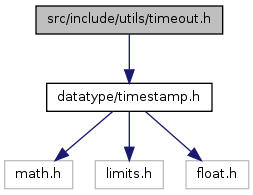

Go to the source code of this file.
| typedef void(* timeout_handler_proc)(void) |
| typedef enum TimeoutType TimeoutType |
| enum TimeoutId |
| STARTUP_PACKET_TIMEOUT | |
| DEADLOCK_TIMEOUT | |
| LOCK_TIMEOUT | |
| STATEMENT_TIMEOUT | |
| STANDBY_DEADLOCK_TIMEOUT | |
| STANDBY_TIMEOUT | |
| USER_TIMEOUT | |
| MAX_TIMEOUTS |
Definition at line 23 of file timeout.h.
{
    /* Predefined timeout reasons */
    STARTUP_PACKET_TIMEOUT,
    DEADLOCK_TIMEOUT,
    LOCK_TIMEOUT,
    STATEMENT_TIMEOUT,
    STANDBY_DEADLOCK_TIMEOUT,
    STANDBY_TIMEOUT,
    /* First user-definable timeout reason */
    USER_TIMEOUT,
    /* Maximum number of timeout reasons */
    MAX_TIMEOUTS = 16
} TimeoutId;
| enum TimeoutType |
Definition at line 44 of file timeout.h.
{
    TMPARAM_AFTER,
    TMPARAM_AT
} TimeoutType;
| void disable_all_timeouts | ( | bool | keep_indicators | ) |
Definition at line 564 of file timeout.c.
References disable_alarm, elog, FATAL, i, ITIMER_REAL, MemSet, NULL, num_active_timeouts, and setitimer().
Referenced by AutoVacLauncherMain(), PostgresMain(), and ResolveRecoveryConflictWithBufferPin().
{
    disable_alarm();

    /*
     * Only bother to reset the timer if we think it's active.  We could just
     * let the interrupt happen anyway, but it's probably a bit cheaper to do
     * setitimer() than to let the useless interrupt happen.
     */
    if (num_active_timeouts > 0)
    {
        struct itimerval timeval;

        MemSet(&timeval, 0, sizeof(struct itimerval));
        if (setitimer(ITIMER_REAL, &timeval, NULL) != 0)
            elog(FATAL, "could not disable SIGALRM timer: %m");
    }

    num_active_timeouts = 0;

    if (!keep_indicators)
    {
        int         i;

        for (i = 0; i < MAX_TIMEOUTS; i++)
            all_timeouts[i].indicator = false;
    }
}
Definition at line 493 of file timeout.c.
References all_timeouts_initialized, Assert, disable_alarm, find_active_timeout(), GetCurrentTimestamp(), i, timeout_params::indicator, NULL, num_active_timeouts, remove_timeout_index(), and schedule_alarm().
Referenced by BackendInitialize(), finish_xact_command(), PerformAuthentication(), ProcSleep(), StandbyTimeoutHandler(), and start_xact_command().
{
    int         i;

    /* Assert request is sane */
    Assert(all_timeouts_initialized);
    Assert(all_timeouts[id].timeout_handler != NULL);

    /* Disable timeout interrupts for safety. */
    disable_alarm();

    /* Find the timeout and remove it from the active list. */
    i = find_active_timeout(id);
    if (i >= 0)
        remove_timeout_index(i);

    /* Mark it inactive, whether it was active or not. */
    if (!keep_indicator)
        all_timeouts[id].indicator = false;

    /* Reschedule the interrupt, if any timeouts remain active. */
    if (num_active_timeouts > 0)
        schedule_alarm(GetCurrentTimestamp());
}
| void disable_timeouts | ( | const DisableTimeoutParams * | timeouts, | |
| int | count | |||
| ) |
Definition at line 529 of file timeout.c.
References all_timeouts_initialized, Assert, disable_alarm, find_active_timeout(), GetCurrentTimestamp(), i, DisableTimeoutParams::id, timeout_params::indicator, NULL, num_active_timeouts, remove_timeout_index(), and schedule_alarm().
Referenced by LockErrorCleanup(), and ProcSleep().
{
    int         i;

    Assert(all_timeouts_initialized);

    /* Disable timeout interrupts for safety. */
    disable_alarm();

    /* Cancel the timeout(s). */
    for (i = 0; i < count; i++)
    {
        TimeoutId   id = timeouts[i].id;
        int         idx;

        Assert(all_timeouts[id].timeout_handler != NULL);

        idx = find_active_timeout(id);
        if (idx >= 0)
            remove_timeout_index(idx);

        if (!timeouts[i].keep_indicator)
            all_timeouts[id].indicator = false;
    }

    /* Reschedule the interrupt, if any timeouts remain active. */
    if (num_active_timeouts > 0)
        schedule_alarm(GetCurrentTimestamp());
}
| void enable_timeout_after | ( | TimeoutId | id, | |
| int | delay_ms | |||
| ) |
Definition at line 396 of file timeout.c.
References disable_alarm, enable_timeout(), GetCurrentTimestamp(), schedule_alarm(), and TimestampTzPlusMilliseconds.
Referenced by BackendInitialize(), PerformAuthentication(), ProcSleep(), ResolveRecoveryConflictWithBufferPin(), and start_xact_command().
{
    TimestampTz now;
    TimestampTz fin_time;

    /* Disable timeout interrupts for safety. */
    disable_alarm();

    /* Queue the timeout at the appropriate time. */
    now = GetCurrentTimestamp();
    fin_time = TimestampTzPlusMilliseconds(now, delay_ms);
    enable_timeout(id, now, fin_time);

    /* Set the timer interrupt. */
    schedule_alarm(now);
}
| void enable_timeout_at | ( | TimeoutId | id, | |
| TimestampTz | fin_time | |||
| ) |
Definition at line 421 of file timeout.c.
References disable_alarm, enable_timeout(), GetCurrentTimestamp(), and schedule_alarm().
{
    TimestampTz now;

    /* Disable timeout interrupts for safety. */
    disable_alarm();

    /* Queue the timeout at the appropriate time. */
    now = GetCurrentTimestamp();
    enable_timeout(id, now, fin_time);

    /* Set the timer interrupt. */
    schedule_alarm(now);
}
| void enable_timeouts | ( | const EnableTimeoutParams * | timeouts, | |
| int | count | |||
| ) |
Definition at line 444 of file timeout.c.
References disable_alarm, elog, enable_timeout(), ERROR, GetCurrentTimestamp(), i, EnableTimeoutParams::id, schedule_alarm(), TimestampTzPlusMilliseconds, TMPARAM_AFTER, and TMPARAM_AT.
Referenced by ProcSleep(), and ResolveRecoveryConflictWithBufferPin().
{
    TimestampTz now;
    int         i;

    /* Disable timeout interrupts for safety. */
    disable_alarm();

    /* Queue the timeout(s) at the appropriate times. */
    now = GetCurrentTimestamp();

    for (i = 0; i < count; i++)
    {
        TimeoutId   id = timeouts[i].id;
        TimestampTz fin_time;

        switch (timeouts[i].type)
        {
            case TMPARAM_AFTER:
                fin_time = TimestampTzPlusMilliseconds(now,
                                                       timeouts[i].delay_ms);
                enable_timeout(id, now, fin_time);
                break;

            case TMPARAM_AT:
                enable_timeout(id, now, timeouts[i].fin_time);
                break;

            default:
                elog(ERROR, "unrecognized timeout type %d",
                     (int) timeouts[i].type);
                break;
        }
    }

    /* Set the timer interrupt. */
    schedule_alarm(now);
}
Definition at line 601 of file timeout.c.
References timeout_params::indicator.
Referenced by ProcessInterrupts().
{
    if (all_timeouts[id].indicator)
    {
        if (reset_indicator)
            all_timeouts[id].indicator = false;
        return true;
    }
    return false;
}
| TimestampTz get_timeout_start_time | ( | TimeoutId | id | ) |
Definition at line 621 of file timeout.c.
References timeout_params::start_time.
Referenced by ProcSleep().
{
    return all_timeouts[id].start_time;
}
| void InitializeTimeouts | ( | void | ) |
Definition at line 332 of file timeout.c.
References all_timeouts_initialized, disable_alarm, timeout_params::fin_time, handle_sig_alarm(), i, timeout_params::index, timeout_params::indicator, num_active_timeouts, pqsignal(), SIGALRM, timeout_params::start_time, and timeout_params::timeout_handler.
Referenced by AutoVacLauncherMain(), AutoVacWorkerMain(), BackendInitialize(), do_start_bgworker(), PostgresMain(), StartupProcessMain(), and WalSndSignals().
{
    int         i;

    /* Initialize, or re-initialize, all local state */
    disable_alarm();

    num_active_timeouts = 0;

    for (i = 0; i < MAX_TIMEOUTS; i++)
    {
        all_timeouts[i].index = i;
        all_timeouts[i].indicator = false;
        all_timeouts[i].timeout_handler = NULL;
        all_timeouts[i].start_time = 0;
        all_timeouts[i].fin_time = 0;
    }

    all_timeouts_initialized = true;

    /* Now establish the signal handler */
    pqsignal(SIGALRM, handle_sig_alarm);
}
| TimeoutId RegisterTimeout | ( | TimeoutId | id, | |
| timeout_handler_proc | handler | |||
| ) |
Definition at line 365 of file timeout.c.
References all_timeouts_initialized, Assert, ereport, errcode(), errmsg(), FATAL, NULL, timeout_params::timeout_handler, and USER_TIMEOUT.
Referenced by BackendInitialize(), InitPostgres(), and StartupProcessMain().
{
    Assert(all_timeouts_initialized);

    /* There's no need to disable the signal handler here. */

    if (id >= USER_TIMEOUT)
    {
        /* Allocate a user-defined timeout reason */
        for (id = USER_TIMEOUT; id < MAX_TIMEOUTS; id++)
            if (all_timeouts[id].timeout_handler == NULL)
                break;
        if (id >= MAX_TIMEOUTS)
            ereport(FATAL,
                    (errcode(ERRCODE_CONFIGURATION_LIMIT_EXCEEDED),
                     errmsg("cannot add more timeout reasons")));
    }

    Assert(all_timeouts[id].timeout_handler == NULL);

    all_timeouts[id].timeout_handler = handler;

    return id;
}
 1.7.1
1.7.1