|

|

|

|

|
|
|
|
|
|
|
 |
 |
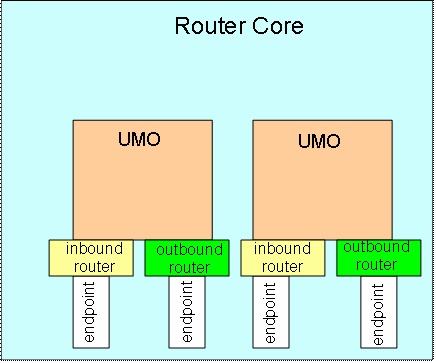
Figure 2.1, “High-Level Router Architecture” shows a high-level view of a router instance that implements two routes. Each route is made up of the following parts:
two, or more, endpoints
an inbound router
an outbound router
a universal messaging object (UMO)
The endpoints are where the Celtix Advanced Service Engine is embedded into the router. The inbound router is responsible for forwarding the message into the UMO. The UMO, depending on the route, will either simply pass the message through to the outbound router or perform some processing on the message before passing it to the outbound router. The outbound router determines where the message should be forwarded and passes it off to the proper endpoint.
| |

|
|

|