


A Fuse Mediation Router route is essentially a pipeline of processors, of
org.apache.camel.Processor type. Messages are
encapsulated in an exchange object, E, which gets passed from node to node by
invoking the process() method. The architecture of the processor pipeline is
illustrated in Figure 5.2.
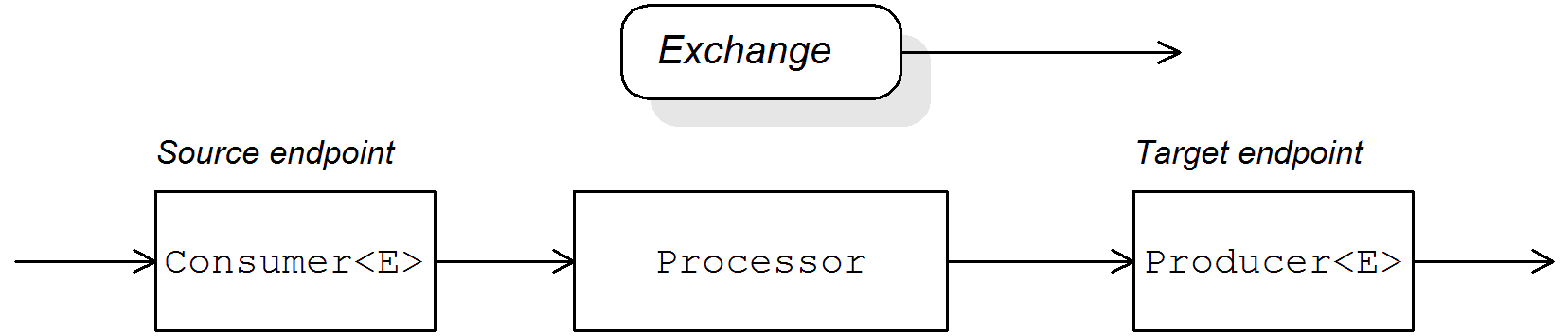
At the start of the route, you have the source endpoint, which is represented by an
org.apache.camel.Consumer object. The source endpoint is responsible for
accepting incoming request messages and dispatching replies. When constructing the route,
Fuse Mediation Router creates the appropriate Consumer type based on the component prefix
from the endpoint URI, as described in Factory Patterns for a Component.
Each intermediate node in the pipeline is represented by a processor object
(implementing the org.apache.camel.Processor interface).
You can insert either standard processors (for example, filter,
throttler, or delayer) or insert your own custom processor
implementations.
At the end of the route is the target endpoint, which is represented by an
org.apache.camel.Producer object. Because it comes at the end of a
processor pipeline, the producer is also a processor object (implementing the
org.apache.camel.Processor interface). The target
endpoint is responsible for sending outgoing request messages and receiving incoming
replies. When constructing the route, Fuse Mediation Router creates the appropriate
Producer type based on the component prefix from the endpoint URI.
 |  |  |
 |

