Header And Logo

|

#include "fmgr.h"#include "storage/block.h"#include "storage/relfilenode.h"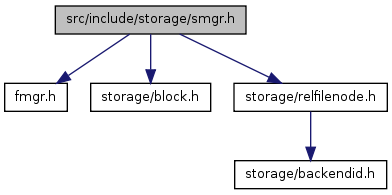

Go to the source code of this file.
| #define SmgrIsTemp | ( | smgr | ) | RelFileNodeBackendIsTemp((smgr)->smgr_rnode) |
Definition at line 76 of file smgr.h.
Referenced by mdextend(), mdtruncate(), mdwrite(), ReadBuffer_common(), and register_dirty_segment().
| typedef SMgrRelationData* SMgrRelation |
| typedef struct SMgrRelationData SMgrRelationData |
| void AtEOXact_SMgr | ( | void | ) |
Definition at line 749 of file smgr.c.
References Assert, NULL, SMgrRelationData::smgr_owner, and smgrclose().
Referenced by AbortTransaction(), BackgroundWriterMain(), CheckpointerMain(), CommitTransaction(), PrepareTransaction(), and WalWriterMain().
{
    /*
     * Zap all unowned SMgrRelations.  We rely on smgrclose() to remove each
     * one from the list.
     */
    while (first_unowned_reln != NULL)
    {
        Assert(first_unowned_reln->smgr_owner == NULL);
        smgrclose(first_unowned_reln);
    }
}
| void ForgetDatabaseFsyncRequests | ( | Oid | dbid | ) |
Definition at line 1606 of file md.c.
References RelFileNode::dbNode, FORGET_DATABASE_FSYNC, ForwardFsyncRequest(), InvalidForkNumber, IsUnderPostmaster, pg_usleep(), RelFileNode::relNode, RememberFsyncRequest(), and RelFileNode::spcNode.
Referenced by dbase_redo(), and dropdb().
{
    RelFileNode rnode;

    rnode.dbNode = dbid;
    rnode.spcNode = 0;
    rnode.relNode = 0;

    if (pendingOpsTable)
    {
        /* standalone backend or startup process: fsync state is local */
        RememberFsyncRequest(rnode, InvalidForkNumber, FORGET_DATABASE_FSYNC);
    }
    else if (IsUnderPostmaster)
    {
        /* see notes in ForgetRelationFsyncRequests */
        while (!ForwardFsyncRequest(rnode, InvalidForkNumber,
                                    FORGET_DATABASE_FSYNC))
            pg_usleep(10000L);  /* 10 msec seems a good number */
    }
}
| void ForgetRelationFsyncRequests | ( | RelFileNode | rnode, | |
| ForkNumber | forknum | |||
| ) |
Definition at line 1573 of file md.c.
References FORGET_RELATION_FSYNC, ForwardFsyncRequest(), IsUnderPostmaster, pg_usleep(), and RememberFsyncRequest().
Referenced by mdunlink().
{
    if (pendingOpsTable)
    {
        /* standalone backend or startup process: fsync state is local */
        RememberFsyncRequest(rnode, forknum, FORGET_RELATION_FSYNC);
    }
    else if (IsUnderPostmaster)
    {
        /*
         * Notify the checkpointer about it.  If we fail to queue the cancel
         * message, we have to sleep and try again ... ugly, but hopefully
         * won't happen often.
         *
         * XXX should we CHECK_FOR_INTERRUPTS in this loop?  Escaping with an
         * error would leave the no-longer-used file still present on disk,
         * which would be bad, so I'm inclined to assume that the checkpointer
         * will always empty the queue soon.
         */
        while (!ForwardFsyncRequest(rnode, forknum, FORGET_RELATION_FSYNC))
            pg_usleep(10000L);  /* 10 msec seems a good number */

        /*
         * Note we don't wait for the checkpointer to actually absorb the
         * cancel message; see mdsync() for the implications.
         */
    }
}
| void mdclose | ( | SMgrRelation | reln, | |
| ForkNumber | forknum | |||
| ) |
Definition at line 607 of file md.c.
References FileClose(), SMgrRelationData::md_fd, _MdfdVec::mdfd_chain, _MdfdVec::mdfd_vfd, NULL, and pfree().
Referenced by mdexists().
{
    MdfdVec    *v = reln->md_fd[forknum];

    /* No work if already closed */
    if (v == NULL)
        return;

    reln->md_fd[forknum] = NULL;    /* prevent dangling pointer after error */

    while (v != NULL)
    {
        MdfdVec    *ov = v;

        /* if not closed already */
        if (v->mdfd_vfd >= 0)
            FileClose(v->mdfd_vfd);
        /* Now free vector */
        v = v->mdfd_chain;
        pfree(ov);
    }
}
| void mdcreate | ( | SMgrRelation | reln, | |
| ForkNumber | forknum, | |||
| bool | isRedo | |||
| ) |
Definition at line 273 of file md.c.
References _fdvec_alloc(), Assert, ereport, errcode_for_file_access(), errmsg(), ERROR, IsBootstrapProcessingMode, SMgrRelationData::md_fd, _MdfdVec::mdfd_chain, _MdfdVec::mdfd_segno, _MdfdVec::mdfd_vfd, NULL, PathNameOpenFile(), pfree(), PG_BINARY, relpath, and SMgrRelationData::smgr_rnode.
{
    char       *path;
    File        fd;

    if (isRedo && reln->md_fd[forkNum] != NULL)
        return;                 /* created and opened already... */

    Assert(reln->md_fd[forkNum] == NULL);

    path = relpath(reln->smgr_rnode, forkNum);

    fd = PathNameOpenFile(path, O_RDWR | O_CREAT | O_EXCL | PG_BINARY, 0600);

    if (fd < 0)
    {
        int         save_errno = errno;

        /*
         * During bootstrap, there are cases where a system relation will be
         * accessed (by internal backend processes) before the bootstrap
         * script nominally creates it.  Therefore, allow the file to exist
         * already, even if isRedo is not set.  (See also mdopen)
         */
        if (isRedo || IsBootstrapProcessingMode())
            fd = PathNameOpenFile(path, O_RDWR | PG_BINARY, 0600);
        if (fd < 0)
        {
            /* be sure to report the error reported by create, not open */
            errno = save_errno;
            ereport(ERROR,
                    (errcode_for_file_access(),
                     errmsg("could not create file \"%s\": %m", path)));
        }
    }

    pfree(path);

    reln->md_fd[forkNum] = _fdvec_alloc();

    reln->md_fd[forkNum]->mdfd_vfd = fd;
    reln->md_fd[forkNum]->mdfd_segno = 0;
    reln->md_fd[forkNum]->mdfd_chain = NULL;
}
| bool mdexists | ( | SMgrRelation | reln, | |
| ForkNumber | forknum | |||
| ) |
Definition at line 256 of file md.c.
References EXTENSION_RETURN_NULL, mdclose(), mdopen(), and NULL.
{
    /*
     * Close it first, to ensure that we notice if the fork has been unlinked
     * since we opened it.
     */
    mdclose(reln, forkNum);

    return (mdopen(reln, forkNum, EXTENSION_RETURN_NULL) != NULL);
}
| void mdextend | ( | SMgrRelation | reln, | |
| ForkNumber | forknum, | |||
| BlockNumber | blocknum, | |||
| char * | buffer, | |||
| bool | skipFsync | |||
| ) |
Definition at line 474 of file md.c.
References _mdfd_getseg(), _mdnblocks(), Assert, ereport, errcode(), errcode_for_file_access(), errhint(), errmsg(), ERROR, EXTENSION_CREATE, FilePathName(), FileSeek(), FileWrite(), InvalidBlockNumber, _MdfdVec::mdfd_vfd, mdnblocks(), register_dirty_segment(), relpath, SMgrRelationData::smgr_rnode, and SmgrIsTemp.
Referenced by _mdfd_getseg().
{
    off_t       seekpos;
    int         nbytes;
    MdfdVec    *v;

    /* This assert is too expensive to have on normally ... */
#ifdef CHECK_WRITE_VS_EXTEND
    Assert(blocknum >= mdnblocks(reln, forknum));
#endif

    /*
     * If a relation manages to grow to 2^32-1 blocks, refuse to extend it any
     * more --- we mustn't create a block whose number actually is
     * InvalidBlockNumber.
     */
    if (blocknum == InvalidBlockNumber)
        ereport(ERROR,
                (errcode(ERRCODE_PROGRAM_LIMIT_EXCEEDED),
                 errmsg("cannot extend file \"%s\" beyond %u blocks",
                        relpath(reln->smgr_rnode, forknum),
                        InvalidBlockNumber)));

    v = _mdfd_getseg(reln, forknum, blocknum, skipFsync, EXTENSION_CREATE);

    seekpos = (off_t) BLCKSZ *(blocknum % ((BlockNumber) RELSEG_SIZE));

    Assert(seekpos < (off_t) BLCKSZ * RELSEG_SIZE);

    /*
     * Note: because caller usually obtained blocknum by calling mdnblocks,
     * which did a seek(SEEK_END), this seek is often redundant and will be
     * optimized away by fd.c.  It's not redundant, however, if there is a
     * partial page at the end of the file. In that case we want to try to
     * overwrite the partial page with a full page.  It's also not redundant
     * if bufmgr.c had to dump another buffer of the same file to make room
     * for the new page's buffer.
     */
    if (FileSeek(v->mdfd_vfd, seekpos, SEEK_SET) != seekpos)
        ereport(ERROR,
                (errcode_for_file_access(),
                 errmsg("could not seek to block %u in file \"%s\": %m",
                        blocknum, FilePathName(v->mdfd_vfd))));

    if ((nbytes = FileWrite(v->mdfd_vfd, buffer, BLCKSZ)) != BLCKSZ)
    {
        if (nbytes < 0)
            ereport(ERROR,
                    (errcode_for_file_access(),
                     errmsg("could not extend file \"%s\": %m",
                            FilePathName(v->mdfd_vfd)),
                     errhint("Check free disk space.")));
        /* short write: complain appropriately */
        ereport(ERROR,
                (errcode(ERRCODE_DISK_FULL),
                 errmsg("could not extend file \"%s\": wrote only %d of %d bytes at block %u",
                        FilePathName(v->mdfd_vfd),
                        nbytes, BLCKSZ, blocknum),
                 errhint("Check free disk space.")));
    }

    if (!skipFsync && !SmgrIsTemp(reln))
        register_dirty_segment(reln, forknum, v);

    Assert(_mdnblocks(reln, forknum, v) <= ((BlockNumber) RELSEG_SIZE));
}
| void mdimmedsync | ( | SMgrRelation | reln, | |
| ForkNumber | forknum | |||
| ) |
Definition at line 950 of file md.c.
References ereport, errcode_for_file_access(), errmsg(), ERROR, EXTENSION_FAIL, FilePathName(), FileSync(), _MdfdVec::mdfd_chain, _MdfdVec::mdfd_vfd, mdnblocks(), mdopen(), and NULL.
{
    MdfdVec    *v;

    /*
     * NOTE: mdnblocks makes sure we have opened all active segments, so that
     * fsync loop will get them all!
     */
    mdnblocks(reln, forknum);

    v = mdopen(reln, forknum, EXTENSION_FAIL);

    while (v != NULL)
    {
        if (FileSync(v->mdfd_vfd) < 0)
            ereport(ERROR,
                    (errcode_for_file_access(),
                     errmsg("could not fsync file \"%s\": %m",
                            FilePathName(v->mdfd_vfd))));
        v = v->mdfd_chain;
    }
}
| void mdinit | ( | void | ) |
Definition at line 196 of file md.c.
References ALLOCSET_DEFAULT_INITSIZE, ALLOCSET_DEFAULT_MAXSIZE, ALLOCSET_DEFAULT_MINSIZE, AllocSetContextCreate(), AmCheckpointerProcess, AmStartupProcess, HASHCTL::entrysize, HASHCTL::hash, HASH_CONTEXT, hash_create(), HASH_ELEM, HASH_FUNCTION, HASHCTL::hcxt, IsUnderPostmaster, HASHCTL::keysize, MemSet, and TopMemoryContext.
{
    MdCxt = AllocSetContextCreate(TopMemoryContext,
                                  "MdSmgr",
                                  ALLOCSET_DEFAULT_MINSIZE,
                                  ALLOCSET_DEFAULT_INITSIZE,
                                  ALLOCSET_DEFAULT_MAXSIZE);

    /*
     * Create pending-operations hashtable if we need it.  Currently, we need
     * it if we are standalone (not under a postmaster) or if we are a startup
     * or checkpointer auxiliary process.
     */
    if (!IsUnderPostmaster || AmStartupProcess() || AmCheckpointerProcess())
    {
        HASHCTL     hash_ctl;

        MemSet(&hash_ctl, 0, sizeof(hash_ctl));
        hash_ctl.keysize = sizeof(RelFileNode);
        hash_ctl.entrysize = sizeof(PendingOperationEntry);
        hash_ctl.hash = tag_hash;
        hash_ctl.hcxt = MdCxt;
        pendingOpsTable = hash_create("Pending Ops Table",
                                      100L,
                                      &hash_ctl,
                                   HASH_ELEM | HASH_FUNCTION | HASH_CONTEXT);
        pendingUnlinks = NIL;
    }
}
| BlockNumber mdnblocks | ( | SMgrRelation | reln, | |
| ForkNumber | forknum | |||
| ) |
Definition at line 795 of file md.c.
References _mdfd_openseg(), _mdfd_segpath(), _mdnblocks(), elog, ereport, errcode_for_file_access(), errmsg(), ERROR, EXTENSION_FAIL, FATAL, _MdfdVec::mdfd_chain, mdopen(), and NULL.
Referenced by mdextend(), mdimmedsync(), mdtruncate(), and mdwrite().
{
    MdfdVec    *v = mdopen(reln, forknum, EXTENSION_FAIL);
    BlockNumber nblocks;
    BlockNumber segno = 0;

    /*
     * Skip through any segments that aren't the last one, to avoid redundant
     * seeks on them.  We have previously verified that these segments are
     * exactly RELSEG_SIZE long, and it's useless to recheck that each time.
     *
     * NOTE: this assumption could only be wrong if another backend has
     * truncated the relation.  We rely on higher code levels to handle that
     * scenario by closing and re-opening the md fd, which is handled via
     * relcache flush.  (Since the checkpointer doesn't participate in
     * relcache flush, it could have segment chain entries for inactive
     * segments; that's OK because the checkpointer never needs to compute
     * relation size.)
     */
    while (v->mdfd_chain != NULL)
    {
        segno++;
        v = v->mdfd_chain;
    }

    for (;;)
    {
        nblocks = _mdnblocks(reln, forknum, v);
        if (nblocks > ((BlockNumber) RELSEG_SIZE))
            elog(FATAL, "segment too big");
        if (nblocks < ((BlockNumber) RELSEG_SIZE))
            return (segno * ((BlockNumber) RELSEG_SIZE)) + nblocks;

        /*
         * If segment is exactly RELSEG_SIZE, advance to next one.
         */
        segno++;

        if (v->mdfd_chain == NULL)
        {
            /*
             * Because we pass O_CREAT, we will create the next segment (with
             * zero length) immediately, if the last segment is of length
             * RELSEG_SIZE.  While perhaps not strictly necessary, this keeps
             * the logic simple.
             */
            v->mdfd_chain = _mdfd_openseg(reln, forknum, segno, O_CREAT);
            if (v->mdfd_chain == NULL)
                ereport(ERROR,
                        (errcode_for_file_access(),
                         errmsg("could not open file \"%s\": %m",
                                _mdfd_segpath(reln, forknum, segno))));
        }

        v = v->mdfd_chain;
    }
}
| void mdpostckpt | ( | void | ) |
Definition at line 1282 of file md.c.
References AbsorbFsyncRequests(), PendingUnlinkEntry::cycle_ctr, ereport, errcode_for_file_access(), errmsg(), linitial, list_delete_first(), MAIN_FORKNUM, mdckpt_cycle_ctr, NIL, pfree(), relpathperm, PendingUnlinkEntry::rnode, unlink(), and WARNING.
{
    int         absorb_counter;

    absorb_counter = UNLINKS_PER_ABSORB;
    while (pendingUnlinks != NIL)
    {
        PendingUnlinkEntry *entry = (PendingUnlinkEntry *) linitial(pendingUnlinks);
        char       *path;

        /*
         * New entries are appended to the end, so if the entry is new we've
         * reached the end of old entries.
         *
         * Note: if just the right number of consecutive checkpoints fail, we
         * could be fooled here by cycle_ctr wraparound.  However, the only
         * consequence is that we'd delay unlinking for one more checkpoint,
         * which is perfectly tolerable.
         */
        if (entry->cycle_ctr == mdckpt_cycle_ctr)
            break;

        /* Unlink the file */
        path = relpathperm(entry->rnode, MAIN_FORKNUM);
        if (unlink(path) < 0)
        {
            /*
             * There's a race condition, when the database is dropped at the
             * same time that we process the pending unlink requests. If the
             * DROP DATABASE deletes the file before we do, we will get ENOENT
             * here. rmtree() also has to ignore ENOENT errors, to deal with
             * the possibility that we delete the file first.
             */
            if (errno != ENOENT)
                ereport(WARNING,
                        (errcode_for_file_access(),
                         errmsg("could not remove file \"%s\": %m", path)));
        }
        pfree(path);

        /* And remove the list entry */
        pendingUnlinks = list_delete_first(pendingUnlinks);
        pfree(entry);

        /*
         * As in mdsync, we don't want to stop absorbing fsync requests for a
         * long time when there are many deletions to be done.  We can safely
         * call AbsorbFsyncRequests() at this point in the loop (note it might
         * try to delete list entries).
         */
        if (--absorb_counter <= 0)
        {
            AbsorbFsyncRequests();
            absorb_counter = UNLINKS_PER_ABSORB;
        }
    }
}
| void mdpreckpt | ( | void | ) |
Definition at line 1267 of file md.c.
References mdckpt_cycle_ctr.
{
    /*
     * Any unlink requests arriving after this point will be assigned the next
     * cycle counter, and won't be unlinked until next checkpoint.
     */
    mdckpt_cycle_ctr++;
}
| void mdprefetch | ( | SMgrRelation | reln, | |
| ForkNumber | forknum, | |||
| BlockNumber | blocknum | |||
| ) |
Definition at line 634 of file md.c.
References _mdfd_getseg(), Assert, EXTENSION_FAIL, FilePrefetch(), and _MdfdVec::mdfd_vfd.
{
#ifdef USE_PREFETCH
    off_t       seekpos;
    MdfdVec    *v;

    v = _mdfd_getseg(reln, forknum, blocknum, false, EXTENSION_FAIL);

    seekpos = (off_t) BLCKSZ *(blocknum % ((BlockNumber) RELSEG_SIZE));

    Assert(seekpos < (off_t) BLCKSZ * RELSEG_SIZE);

    (void) FilePrefetch(v->mdfd_vfd, seekpos, BLCKSZ);
#endif   /* USE_PREFETCH */
}
| void mdread | ( | SMgrRelation | reln, | |
| ForkNumber | forknum, | |||
| BlockNumber | blocknum, | |||
| char * | buffer | |||
| ) |
Definition at line 655 of file md.c.
References _mdfd_getseg(), Assert, RelFileNodeBackend::backend, RelFileNode::dbNode, ereport, errcode(), errcode_for_file_access(), errmsg(), ERROR, EXTENSION_FAIL, FilePathName(), FileRead(), FileSeek(), InRecovery, _MdfdVec::mdfd_vfd, MemSet, RelFileNodeBackend::node, RelFileNode::relNode, SMgrRelationData::smgr_rnode, RelFileNode::spcNode, and zero_damaged_pages.
{
    off_t       seekpos;
    int         nbytes;
    MdfdVec    *v;

    TRACE_POSTGRESQL_SMGR_MD_READ_START(forknum, blocknum,
                                        reln->smgr_rnode.node.spcNode,
                                        reln->smgr_rnode.node.dbNode,
                                        reln->smgr_rnode.node.relNode,
                                        reln->smgr_rnode.backend);

    v = _mdfd_getseg(reln, forknum, blocknum, false, EXTENSION_FAIL);

    seekpos = (off_t) BLCKSZ *(blocknum % ((BlockNumber) RELSEG_SIZE));

    Assert(seekpos < (off_t) BLCKSZ * RELSEG_SIZE);

    if (FileSeek(v->mdfd_vfd, seekpos, SEEK_SET) != seekpos)
        ereport(ERROR,
                (errcode_for_file_access(),
                 errmsg("could not seek to block %u in file \"%s\": %m",
                        blocknum, FilePathName(v->mdfd_vfd))));

    nbytes = FileRead(v->mdfd_vfd, buffer, BLCKSZ);

    TRACE_POSTGRESQL_SMGR_MD_READ_DONE(forknum, blocknum,
                                       reln->smgr_rnode.node.spcNode,
                                       reln->smgr_rnode.node.dbNode,
                                       reln->smgr_rnode.node.relNode,
                                       reln->smgr_rnode.backend,
                                       nbytes,
                                       BLCKSZ);

    if (nbytes != BLCKSZ)
    {
        if (nbytes < 0)
            ereport(ERROR,
                    (errcode_for_file_access(),
                     errmsg("could not read block %u in file \"%s\": %m",
                            blocknum, FilePathName(v->mdfd_vfd))));

        /*
         * Short read: we are at or past EOF, or we read a partial block at
         * EOF.  Normally this is an error; upper levels should never try to
         * read a nonexistent block.  However, if zero_damaged_pages is ON or
         * we are InRecovery, we should instead return zeroes without
         * complaining.  This allows, for example, the case of trying to
         * update a block that was later truncated away.
         */
        if (zero_damaged_pages || InRecovery)
            MemSet(buffer, 0, BLCKSZ);
        else
            ereport(ERROR,
                    (errcode(ERRCODE_DATA_CORRUPTED),
                     errmsg("could not read block %u in file \"%s\": read only %d of %d bytes",
                            blocknum, FilePathName(v->mdfd_vfd),
                            nbytes, BLCKSZ)));
    }
}
| void mdsync | ( | void | ) |
Definition at line 977 of file md.c.
References _mdfd_getseg(), _mdfd_segpath(), AbsorbFsyncRequests(), Assert, bms_first_member(), bms_free(), PendingOperationEntry::canceled, CheckpointStats, CheckpointStatsData::ckpt_agg_sync_time, CheckpointStatsData::ckpt_longest_sync, CheckpointStatsData::ckpt_sync_rels, PendingOperationEntry::cycle_ctr, DEBUG1, elog, enableFsync, ereport, errcode_for_file_access(), errmsg(), ERROR, EXTENSION_RETURN_NULL, FILE_POSSIBLY_DELETED, FilePathName(), FileSync(), HASH_REMOVE, hash_search(), hash_seq_init(), hash_seq_search(), INSTR_TIME_GET_MICROSEC, INSTR_TIME_SET_CURRENT, INSTR_TIME_SUBTRACT, InvalidBackendId, log_checkpoints, longest(), MAX_FORKNUM, _MdfdVec::mdfd_vfd, mdsync_cycle_ctr, NULL, pfree(), PendingOperationEntry::requests, PendingOperationEntry::rnode, and smgropen().
Referenced by SetForwardFsyncRequests().
{
    static bool mdsync_in_progress = false;

    HASH_SEQ_STATUS hstat;
    PendingOperationEntry *entry;
    int         absorb_counter;

    /* Statistics on sync times */
    int         processed = 0;
    instr_time  sync_start,
                sync_end,
                sync_diff;
    uint64      elapsed;
    uint64      longest = 0;
    uint64      total_elapsed = 0;

    /*
     * This is only called during checkpoints, and checkpoints should only
     * occur in processes that have created a pendingOpsTable.
     */
    if (!pendingOpsTable)
        elog(ERROR, "cannot sync without a pendingOpsTable");

    /*
     * If we are in the checkpointer, the sync had better include all fsync
     * requests that were queued by backends up to this point.  The tightest
     * race condition that could occur is that a buffer that must be written
     * and fsync'd for the checkpoint could have been dumped by a backend just
     * before it was visited by BufferSync().  We know the backend will have
     * queued an fsync request before clearing the buffer's dirtybit, so we
     * are safe as long as we do an Absorb after completing BufferSync().
     */
    AbsorbFsyncRequests();

    /*
     * To avoid excess fsync'ing (in the worst case, maybe a never-terminating
     * checkpoint), we want to ignore fsync requests that are entered into the
     * hashtable after this point --- they should be processed next time,
     * instead.  We use mdsync_cycle_ctr to tell old entries apart from new
     * ones: new ones will have cycle_ctr equal to the incremented value of
     * mdsync_cycle_ctr.
     *
     * In normal circumstances, all entries present in the table at this point
     * will have cycle_ctr exactly equal to the current (about to be old)
     * value of mdsync_cycle_ctr.  However, if we fail partway through the
     * fsync'ing loop, then older values of cycle_ctr might remain when we
     * come back here to try again.  Repeated checkpoint failures would
     * eventually wrap the counter around to the point where an old entry
     * might appear new, causing us to skip it, possibly allowing a checkpoint
     * to succeed that should not have.  To forestall wraparound, any time the
     * previous mdsync() failed to complete, run through the table and
     * forcibly set cycle_ctr = mdsync_cycle_ctr.
     *
     * Think not to merge this loop with the main loop, as the problem is
     * exactly that that loop may fail before having visited all the entries.
     * From a performance point of view it doesn't matter anyway, as this path
     * will never be taken in a system that's functioning normally.
     */
    if (mdsync_in_progress)
    {
        /* prior try failed, so update any stale cycle_ctr values */
        hash_seq_init(&hstat, pendingOpsTable);
        while ((entry = (PendingOperationEntry *) hash_seq_search(&hstat)) != NULL)
        {
            entry->cycle_ctr = mdsync_cycle_ctr;
        }
    }

    /* Advance counter so that new hashtable entries are distinguishable */
    mdsync_cycle_ctr++;

    /* Set flag to detect failure if we don't reach the end of the loop */
    mdsync_in_progress = true;

    /* Now scan the hashtable for fsync requests to process */
    absorb_counter = FSYNCS_PER_ABSORB;
    hash_seq_init(&hstat, pendingOpsTable);
    while ((entry = (PendingOperationEntry *) hash_seq_search(&hstat)) != NULL)
    {
        ForkNumber  forknum;

        /*
         * If the entry is new then don't process it this time; it might
         * contain multiple fsync-request bits, but they are all new.  Note
         * "continue" bypasses the hash-remove call at the bottom of the loop.
         */
        if (entry->cycle_ctr == mdsync_cycle_ctr)
            continue;

        /* Else assert we haven't missed it */
        Assert((CycleCtr) (entry->cycle_ctr + 1) == mdsync_cycle_ctr);

        /*
         * Scan over the forks and segments represented by the entry.
         *
         * The bitmap manipulations are slightly tricky, because we can call
         * AbsorbFsyncRequests() inside the loop and that could result in
         * bms_add_member() modifying and even re-palloc'ing the bitmapsets.
         * This is okay because we unlink each bitmapset from the hashtable
         * entry before scanning it.  That means that any incoming fsync
         * requests will be processed now if they reach the table before we
         * begin to scan their fork.
         */
        for (forknum = 0; forknum <= MAX_FORKNUM; forknum++)
        {
            Bitmapset  *requests = entry->requests[forknum];
            int         segno;

            entry->requests[forknum] = NULL;
            entry->canceled[forknum] = false;

            while ((segno = bms_first_member(requests)) >= 0)
            {
                int         failures;

                /*
                 * If fsync is off then we don't have to bother opening the
                 * file at all.  (We delay checking until this point so that
                 * changing fsync on the fly behaves sensibly.)
                 */
                if (!enableFsync)
                    continue;

                /*
                 * If in checkpointer, we want to absorb pending requests
                 * every so often to prevent overflow of the fsync request
                 * queue.  It is unspecified whether newly-added entries will
                 * be visited by hash_seq_search, but we don't care since we
                 * don't need to process them anyway.
                 */
                if (--absorb_counter <= 0)
                {
                    AbsorbFsyncRequests();
                    absorb_counter = FSYNCS_PER_ABSORB;
                }

                /*
                 * The fsync table could contain requests to fsync segments
                 * that have been deleted (unlinked) by the time we get to
                 * them. Rather than just hoping an ENOENT (or EACCES on
                 * Windows) error can be ignored, what we do on error is
                 * absorb pending requests and then retry.  Since mdunlink()
                 * queues a "cancel" message before actually unlinking, the
                 * fsync request is guaranteed to be marked canceled after the
                 * absorb if it really was this case. DROP DATABASE likewise
                 * has to tell us to forget fsync requests before it starts
                 * deletions.
                 */
                for (failures = 0;; failures++) /* loop exits at "break" */
                {
                    SMgrRelation reln;
                    MdfdVec    *seg;
                    char       *path;
                    int         save_errno;

                    /*
                     * Find or create an smgr hash entry for this relation.
                     * This may seem a bit unclean -- md calling smgr?  But
                     * it's really the best solution.  It ensures that the
                     * open file reference isn't permanently leaked if we get
                     * an error here. (You may say "but an unreferenced
                     * SMgrRelation is still a leak!" Not really, because the
                     * only case in which a checkpoint is done by a process
                     * that isn't about to shut down is in the checkpointer,
                     * and it will periodically do smgrcloseall(). This fact
                     * justifies our not closing the reln in the success path
                     * either, which is a good thing since in non-checkpointer
                     * cases we couldn't safely do that.)
                     */
                    reln = smgropen(entry->rnode, InvalidBackendId);

                    /* Attempt to open and fsync the target segment */
                    seg = _mdfd_getseg(reln, forknum,
                             (BlockNumber) segno * (BlockNumber) RELSEG_SIZE,
                                       false, EXTENSION_RETURN_NULL);

                    INSTR_TIME_SET_CURRENT(sync_start);

                    if (seg != NULL &&
                        FileSync(seg->mdfd_vfd) >= 0)
                    {
                        /* Success; update statistics about sync timing */
                        INSTR_TIME_SET_CURRENT(sync_end);
                        sync_diff = sync_end;
                        INSTR_TIME_SUBTRACT(sync_diff, sync_start);
                        elapsed = INSTR_TIME_GET_MICROSEC(sync_diff);
                        if (elapsed > longest)
                            longest = elapsed;
                        total_elapsed += elapsed;
                        processed++;
                        if (log_checkpoints)
                            elog(DEBUG1, "checkpoint sync: number=%d file=%s time=%.3f msec",
                                 processed,
                                 FilePathName(seg->mdfd_vfd),
                                 (double) elapsed / 1000);

                        break;  /* out of retry loop */
                    }

                    /* Compute file name for use in message */
                    save_errno = errno;
                    path = _mdfd_segpath(reln, forknum, (BlockNumber) segno);
                    errno = save_errno;

                    /*
                     * It is possible that the relation has been dropped or
                     * truncated since the fsync request was entered.
                     * Therefore, allow ENOENT, but only if we didn't fail
                     * already on this file.  This applies both for
                     * _mdfd_getseg() and for FileSync, since fd.c might have
                     * closed the file behind our back.
                     *
                     * XXX is there any point in allowing more than one retry?
                     * Don't see one at the moment, but easy to change the
                     * test here if so.
                     */
                    if (!FILE_POSSIBLY_DELETED(errno) ||
                        failures > 0)
                        ereport(ERROR,
                                (errcode_for_file_access(),
                                 errmsg("could not fsync file \"%s\": %m",
                                        path)));
                    else
                        ereport(DEBUG1,
                                (errcode_for_file_access(),
                        errmsg("could not fsync file \"%s\" but retrying: %m",
                               path)));
                    pfree(path);

                    /*
                     * Absorb incoming requests and check to see if a cancel
                     * arrived for this relation fork.
                     */
                    AbsorbFsyncRequests();
                    absorb_counter = FSYNCS_PER_ABSORB; /* might as well... */

                    if (entry->canceled[forknum])
                        break;
                }               /* end retry loop */
            }
            bms_free(requests);
        }

        /*
         * We've finished everything that was requested before we started to
         * scan the entry.  If no new requests have been inserted meanwhile,
         * remove the entry.  Otherwise, update its cycle counter, as all the
         * requests now in it must have arrived during this cycle.
         */
        for (forknum = 0; forknum <= MAX_FORKNUM; forknum++)
        {
            if (entry->requests[forknum] != NULL)
                break;
        }
        if (forknum <= MAX_FORKNUM)
            entry->cycle_ctr = mdsync_cycle_ctr;
        else
        {
            /* Okay to remove it */
            if (hash_search(pendingOpsTable, &entry->rnode,
                            HASH_REMOVE, NULL) == NULL)
                elog(ERROR, "pendingOpsTable corrupted");
        }
    }                           /* end loop over hashtable entries */

    /* Return sync performance metrics for report at checkpoint end */
    CheckpointStats.ckpt_sync_rels = processed;
    CheckpointStats.ckpt_longest_sync = longest;
    CheckpointStats.ckpt_agg_sync_time = total_elapsed;

    /* Flag successful completion of mdsync */
    mdsync_in_progress = false;
}
| void mdtruncate | ( | SMgrRelation | reln, | |
| ForkNumber | forknum, | |||
| BlockNumber | nblocks | |||
| ) |
Definition at line 857 of file md.c.
References Assert, ereport, errcode_for_file_access(), errmsg(), ERROR, EXTENSION_FAIL, FilePathName(), FileTruncate(), InRecovery, SMgrRelationData::md_fd, _MdfdVec::mdfd_chain, _MdfdVec::mdfd_vfd, mdnblocks(), mdopen(), NULL, pfree(), register_dirty_segment(), relpath, SMgrRelationData::smgr_rnode, and SmgrIsTemp.
{
    MdfdVec    *v;
    BlockNumber curnblk;
    BlockNumber priorblocks;

    /*
     * NOTE: mdnblocks makes sure we have opened all active segments, so that
     * truncation loop will get them all!
     */
    curnblk = mdnblocks(reln, forknum);
    if (nblocks > curnblk)
    {
        /* Bogus request ... but no complaint if InRecovery */
        if (InRecovery)
            return;
        ereport(ERROR,
                (errmsg("could not truncate file \"%s\" to %u blocks: it's only %u blocks now",
                        relpath(reln->smgr_rnode, forknum),
                        nblocks, curnblk)));
    }
    if (nblocks == curnblk)
        return;                 /* no work */

    v = mdopen(reln, forknum, EXTENSION_FAIL);

    priorblocks = 0;
    while (v != NULL)
    {
        MdfdVec    *ov = v;

        if (priorblocks > nblocks)
        {
            /*
             * This segment is no longer active (and has already been unlinked
             * from the mdfd_chain). We truncate the file, but do not delete
             * it, for reasons explained in the header comments.
             */
            if (FileTruncate(v->mdfd_vfd, 0) < 0)
                ereport(ERROR,
                        (errcode_for_file_access(),
                         errmsg("could not truncate file \"%s\": %m",
                                FilePathName(v->mdfd_vfd))));

            if (!SmgrIsTemp(reln))
                register_dirty_segment(reln, forknum, v);
            v = v->mdfd_chain;
            Assert(ov != reln->md_fd[forknum]); /* we never drop the 1st
                                                 * segment */
            pfree(ov);
        }
        else if (priorblocks + ((BlockNumber) RELSEG_SIZE) > nblocks)
        {
            /*
             * This is the last segment we want to keep. Truncate the file to
             * the right length, and clear chain link that points to any
             * remaining segments (which we shall zap). NOTE: if nblocks is
             * exactly a multiple K of RELSEG_SIZE, we will truncate the K+1st
             * segment to 0 length but keep it. This adheres to the invariant
             * given in the header comments.
             */
            BlockNumber lastsegblocks = nblocks - priorblocks;

            if (FileTruncate(v->mdfd_vfd, (off_t) lastsegblocks * BLCKSZ) < 0)
                ereport(ERROR,
                        (errcode_for_file_access(),
                    errmsg("could not truncate file \"%s\" to %u blocks: %m",
                           FilePathName(v->mdfd_vfd),
                           nblocks)));
            if (!SmgrIsTemp(reln))
                register_dirty_segment(reln, forknum, v);
            v = v->mdfd_chain;
            ov->mdfd_chain = NULL;
        }
        else
        {
            /*
             * We still need this segment and 0 or more blocks beyond it, so
             * nothing to do here.
             */
            v = v->mdfd_chain;
        }
        priorblocks += RELSEG_SIZE;
    }
}
| void mdunlink | ( | RelFileNodeBackend | rnode, | |
| ForkNumber | forknum, | |||
| bool | isRedo | |||
| ) |
Definition at line 366 of file md.c.
References ForgetRelationFsyncRequests(), InvalidForkNumber, mdunlinkfork(), RelFileNodeBackend::node, and RelFileNodeBackendIsTemp.
{
    /*
     * We have to clean out any pending fsync requests for the doomed
     * relation, else the next mdsync() will fail.  There can't be any such
     * requests for a temp relation, though.  We can send just one request
     * even when deleting multiple forks, since the fsync queuing code accepts
     * the "InvalidForkNumber = all forks" convention.
     */
    if (!RelFileNodeBackendIsTemp(rnode))
        ForgetRelationFsyncRequests(rnode.node, forkNum);

    /* Now do the per-fork work */
    if (forkNum == InvalidForkNumber)
    {
        for (forkNum = 0; forkNum <= MAX_FORKNUM; forkNum++)
            mdunlinkfork(rnode, forkNum, isRedo);
    }
    else
        mdunlinkfork(rnode, forkNum, isRedo);
}
| void mdwrite | ( | SMgrRelation | reln, | |
| ForkNumber | forknum, | |||
| BlockNumber | blocknum, | |||
| char * | buffer, | |||
| bool | skipFsync | |||
| ) |
Definition at line 725 of file md.c.
References _mdfd_getseg(), Assert, RelFileNodeBackend::backend, RelFileNode::dbNode, ereport, errcode(), errcode_for_file_access(), errhint(), errmsg(), ERROR, EXTENSION_FAIL, FilePathName(), FileSeek(), FileWrite(), _MdfdVec::mdfd_vfd, mdnblocks(), RelFileNodeBackend::node, register_dirty_segment(), RelFileNode::relNode, SMgrRelationData::smgr_rnode, SmgrIsTemp, and RelFileNode::spcNode.
{
    off_t       seekpos;
    int         nbytes;
    MdfdVec    *v;

    /* This assert is too expensive to have on normally ... */
#ifdef CHECK_WRITE_VS_EXTEND
    Assert(blocknum < mdnblocks(reln, forknum));
#endif

    TRACE_POSTGRESQL_SMGR_MD_WRITE_START(forknum, blocknum,
                                         reln->smgr_rnode.node.spcNode,
                                         reln->smgr_rnode.node.dbNode,
                                         reln->smgr_rnode.node.relNode,
                                         reln->smgr_rnode.backend);

    v = _mdfd_getseg(reln, forknum, blocknum, skipFsync, EXTENSION_FAIL);

    seekpos = (off_t) BLCKSZ *(blocknum % ((BlockNumber) RELSEG_SIZE));

    Assert(seekpos < (off_t) BLCKSZ * RELSEG_SIZE);

    if (FileSeek(v->mdfd_vfd, seekpos, SEEK_SET) != seekpos)
        ereport(ERROR,
                (errcode_for_file_access(),
                 errmsg("could not seek to block %u in file \"%s\": %m",
                        blocknum, FilePathName(v->mdfd_vfd))));

    nbytes = FileWrite(v->mdfd_vfd, buffer, BLCKSZ);

    TRACE_POSTGRESQL_SMGR_MD_WRITE_DONE(forknum, blocknum,
                                        reln->smgr_rnode.node.spcNode,
                                        reln->smgr_rnode.node.dbNode,
                                        reln->smgr_rnode.node.relNode,
                                        reln->smgr_rnode.backend,
                                        nbytes,
                                        BLCKSZ);

    if (nbytes != BLCKSZ)
    {
        if (nbytes < 0)
            ereport(ERROR,
                    (errcode_for_file_access(),
                     errmsg("could not write block %u in file \"%s\": %m",
                            blocknum, FilePathName(v->mdfd_vfd))));
        /* short write: complain appropriately */
        ereport(ERROR,
                (errcode(ERRCODE_DISK_FULL),
                 errmsg("could not write block %u in file \"%s\": wrote only %d of %d bytes",
                        blocknum,
                        FilePathName(v->mdfd_vfd),
                        nbytes, BLCKSZ),
                 errhint("Check free disk space.")));
    }

    if (!skipFsync && !SmgrIsTemp(reln))
        register_dirty_segment(reln, forknum, v);
}
| void RememberFsyncRequest | ( | RelFileNode | rnode, | |
| ForkNumber | forknum, | |||
| BlockNumber | segno | |||
| ) |
Definition at line 1435 of file md.c.
References Assert, bms_add_member(), bms_free(), PendingOperationEntry::canceled, PendingOperationEntry::cycle_ctr, PendingUnlinkEntry::cycle_ctr, RelFileNode::dbNode, FORGET_DATABASE_FSYNC, FORGET_RELATION_FSYNC, HASH_ENTER, HASH_FIND, hash_search(), hash_seq_init(), hash_seq_search(), InvalidForkNumber, lappend(), lfirst, list_delete_cell(), list_head(), lnext, MAIN_FORKNUM, mdckpt_cycle_ctr, mdsync_cycle_ctr, MemoryContextSwitchTo(), MemSet, NULL, palloc(), pfree(), PendingOperationEntry::requests, PendingUnlinkEntry::rnode, PendingOperationEntry::rnode, and UNLINK_RELATION_REQUEST.
Referenced by AbsorbFsyncRequests(), ForgetDatabaseFsyncRequests(), ForgetRelationFsyncRequests(), register_dirty_segment(), and register_unlink().
{
    Assert(pendingOpsTable);

    if (segno == FORGET_RELATION_FSYNC)
    {
        /* Remove any pending requests for the relation (one or all forks) */
        PendingOperationEntry *entry;

        entry = (PendingOperationEntry *) hash_search(pendingOpsTable,
                                                      &rnode,
                                                      HASH_FIND,
                                                      NULL);
        if (entry)
        {
            /*
             * We can't just delete the entry since mdsync could have an
             * active hashtable scan.  Instead we delete the bitmapsets; this
             * is safe because of the way mdsync is coded.  We also set the
             * "canceled" flags so that mdsync can tell that a cancel arrived
             * for the fork(s).
             */
            if (forknum == InvalidForkNumber)
            {
                /* remove requests for all forks */
                for (forknum = 0; forknum <= MAX_FORKNUM; forknum++)
                {
                    bms_free(entry->requests[forknum]);
                    entry->requests[forknum] = NULL;
                    entry->canceled[forknum] = true;
                }
            }
            else
            {
                /* remove requests for single fork */
                bms_free(entry->requests[forknum]);
                entry->requests[forknum] = NULL;
                entry->canceled[forknum] = true;
            }
        }
    }
    else if (segno == FORGET_DATABASE_FSYNC)
    {
        /* Remove any pending requests for the entire database */
        HASH_SEQ_STATUS hstat;
        PendingOperationEntry *entry;
        ListCell   *cell,
                   *prev,
                   *next;

        /* Remove fsync requests */
        hash_seq_init(&hstat, pendingOpsTable);
        while ((entry = (PendingOperationEntry *) hash_seq_search(&hstat)) != NULL)
        {
            if (entry->rnode.dbNode == rnode.dbNode)
            {
                /* remove requests for all forks */
                for (forknum = 0; forknum <= MAX_FORKNUM; forknum++)
                {
                    bms_free(entry->requests[forknum]);
                    entry->requests[forknum] = NULL;
                    entry->canceled[forknum] = true;
                }
            }
        }

        /* Remove unlink requests */
        prev = NULL;
        for (cell = list_head(pendingUnlinks); cell; cell = next)
        {
            PendingUnlinkEntry *entry = (PendingUnlinkEntry *) lfirst(cell);

            next = lnext(cell);
            if (entry->rnode.dbNode == rnode.dbNode)
            {
                pendingUnlinks = list_delete_cell(pendingUnlinks, cell, prev);
                pfree(entry);
            }
            else
                prev = cell;
        }
    }
    else if (segno == UNLINK_RELATION_REQUEST)
    {
        /* Unlink request: put it in the linked list */
        MemoryContext oldcxt = MemoryContextSwitchTo(MdCxt);
        PendingUnlinkEntry *entry;

        /* PendingUnlinkEntry doesn't store forknum, since it's always MAIN */
        Assert(forknum == MAIN_FORKNUM);

        entry = palloc(sizeof(PendingUnlinkEntry));
        entry->rnode = rnode;
        entry->cycle_ctr = mdckpt_cycle_ctr;

        pendingUnlinks = lappend(pendingUnlinks, entry);

        MemoryContextSwitchTo(oldcxt);
    }
    else
    {
        /* Normal case: enter a request to fsync this segment */
        MemoryContext oldcxt = MemoryContextSwitchTo(MdCxt);
        PendingOperationEntry *entry;
        bool        found;

        entry = (PendingOperationEntry *) hash_search(pendingOpsTable,
                                                      &rnode,
                                                      HASH_ENTER,
                                                      &found);
        /* if new entry, initialize it */
        if (!found)
        {
            entry->cycle_ctr = mdsync_cycle_ctr;
            MemSet(entry->requests, 0, sizeof(entry->requests));
            MemSet(entry->canceled, 0, sizeof(entry->canceled));
        }

        /*
         * NB: it's intentional that we don't change cycle_ctr if the entry
         * already exists.  The cycle_ctr must represent the oldest fsync
         * request that could be in the entry.
         */

        entry->requests[forknum] = bms_add_member(entry->requests[forknum],
                                                  (int) segno);

        MemoryContextSwitchTo(oldcxt);
    }
}
| void SetForwardFsyncRequests | ( | void | ) |
Definition at line 233 of file md.c.
References Assert, hash_destroy(), mdsync(), and NIL.
Referenced by StartupXLOG().
{
    /* Perform any pending fsyncs we may have queued up, then drop table */
    if (pendingOpsTable)
    {
        mdsync();
        hash_destroy(pendingOpsTable);
    }
    pendingOpsTable = NULL;

    /*
     * We should not have any pending unlink requests, since mdunlink doesn't
     * queue unlink requests when isRedo.
     */
    Assert(pendingUnlinks == NIL);
}
| void smgrclose | ( | SMgrRelation | reln | ) |
Definition at line 261 of file smgr.c.
References elog, ERROR, HASH_REMOVE, hash_search(), NULL, remove_from_unowned_list(), f_smgr::smgr_close, SMgrRelationData::smgr_owner, SMgrRelationData::smgr_rnode, and SMgrRelationData::smgr_which.
Referenced by AtEOXact_SMgr(), ATExecSetTableSpace(), FinishPreparedTransaction(), smgrcloseall(), smgrclosenode(), smgrDoPendingDeletes(), xact_redo_abort(), and xact_redo_commit_internal().
{
    SMgrRelation *owner;
    ForkNumber  forknum;

    for (forknum = 0; forknum <= MAX_FORKNUM; forknum++)
        (*(smgrsw[reln->smgr_which].smgr_close)) (reln, forknum);

    owner = reln->smgr_owner;

    if (!owner)
        remove_from_unowned_list(reln);

    if (hash_search(SMgrRelationHash,
                    (void *) &(reln->smgr_rnode),
                    HASH_REMOVE, NULL) == NULL)
        elog(ERROR, "SMgrRelation hashtable corrupted");

    /*
     * Unhook the owner pointer, if any.  We do this last since in the remote
     * possibility of failure above, the SMgrRelation object will still exist.
     */
    if (owner)
        *owner = NULL;
}
| void smgrcloseall | ( | void | ) |
Definition at line 291 of file smgr.c.
References hash_seq_init(), hash_seq_search(), NULL, and smgrclose().
Referenced by BackgroundWriterMain(), CheckpointerMain(), RelationCacheInvalidate(), RequestCheckpoint(), WalWriterMain(), and XLogDropDatabase().
{
    HASH_SEQ_STATUS status;
    SMgrRelation reln;

    /* Nothing to do if hashtable not set up */
    if (SMgrRelationHash == NULL)
        return;

    hash_seq_init(&status, SMgrRelationHash);

    while ((reln = (SMgrRelation) hash_seq_search(&status)) != NULL)
        smgrclose(reln);
}
| void smgrclosenode | ( | RelFileNodeBackend | rnode | ) |
Definition at line 315 of file smgr.c.
References hash_search(), NULL, and smgrclose().
Referenced by LocalExecuteInvalidationMessage(), and RelationSetNewRelfilenode().
{
    SMgrRelation reln;

    /* Nothing to do if hashtable not set up */
    if (SMgrRelationHash == NULL)
        return;

    reln = (SMgrRelation) hash_search(SMgrRelationHash,
                                      (void *) &rnode,
                                      HASH_FIND, NULL);
    if (reln != NULL)
        smgrclose(reln);
}
| void smgrcreate | ( | SMgrRelation | reln, | |
| ForkNumber | forknum, | |||
| bool | isRedo | |||
| ) |
Definition at line 341 of file smgr.c.
References RelFileNode::dbNode, SMgrRelationData::md_fd, RelFileNodeBackend::node, NULL, f_smgr::smgr_create, SMgrRelationData::smgr_rnode, SMgrRelationData::smgr_which, RelFileNode::spcNode, and TablespaceCreateDbspace().
Referenced by ATExecSetTableSpace(), fsm_extend(), heap_create_init_fork(), index_build(), RelationCreateStorage(), smgr_redo(), vm_extend(), and XLogReadBufferExtended().
{
    /*
     * Exit quickly in WAL replay mode if we've already opened the file. If
     * it's open, it surely must exist.
     */
    if (isRedo && reln->md_fd[forknum] != NULL)
        return;

    /*
     * We may be using the target table space for the first time in this
     * database, so create a per-database subdirectory if needed.
     *
     * XXX this is a fairly ugly violation of module layering, but this seems
     * to be the best place to put the check.  Maybe TablespaceCreateDbspace
     * should be here and not in commands/tablespace.c?  But that would imply
     * importing a lot of stuff that smgr.c oughtn't know, either.
     */
    TablespaceCreateDbspace(reln->smgr_rnode.node.spcNode,
                            reln->smgr_rnode.node.dbNode,
                            isRedo);

    (*(smgrsw[reln->smgr_which].smgr_create)) (reln, forknum, isRedo);
}
| void smgrdounlink | ( | SMgrRelation | reln, | |
| bool | isRedo | |||
| ) |
Definition at line 379 of file smgr.c.
References CacheInvalidateSmgr(), DropRelFileNodesAllBuffers(), SMgrRelationData::smgr_rnode, f_smgr::smgr_unlink, and SMgrRelationData::smgr_which.
Referenced by FinishPreparedTransaction(), xact_redo_abort(), and xact_redo_commit_internal().
{
    RelFileNodeBackend rnode = reln->smgr_rnode;
    int         which = reln->smgr_which;
    ForkNumber  forknum;

    /* Close the forks at smgr level */
    for (forknum = 0; forknum <= MAX_FORKNUM; forknum++)
        (*(smgrsw[which].smgr_close)) (reln, forknum);

    /*
     * Get rid of any remaining buffers for the relation.  bufmgr will just
     * drop them without bothering to write the contents.
     */
    DropRelFileNodesAllBuffers(&rnode, 1);

    /*
     * It'd be nice to tell the stats collector to forget it immediately, too.
     * But we can't because we don't know the OID (and in cases involving
     * relfilenode swaps, it's not always clear which table OID to forget,
     * anyway).
     */

    /*
     * Send a shared-inval message to force other backends to close any
     * dangling smgr references they may have for this rel.  We should do this
     * before starting the actual unlinking, in case we fail partway through
     * that step.  Note that the sinval message will eventually come back to
     * this backend, too, and thereby provide a backstop that we closed our
     * own smgr rel.
     */
    CacheInvalidateSmgr(rnode);

    /*
     * Delete the physical file(s).
     *
     * Note: smgr_unlink must treat deletion failure as a WARNING, not an
     * ERROR, because we've already decided to commit or abort the current
     * xact.
     */
    (*(smgrsw[which].smgr_unlink)) (rnode, InvalidForkNumber, isRedo);
}
| void smgrdounlinkall | ( | SMgrRelation * | rels, | |
| int | nrels, | |||
| bool | isRedo | |||
| ) |
Definition at line 436 of file smgr.c.
References CacheInvalidateSmgr(), DropRelFileNodesAllBuffers(), i, palloc(), pfree(), SMgrRelationData::smgr_rnode, and SMgrRelationData::smgr_which.
Referenced by smgrDoPendingDeletes().
{
    int     i = 0;
    RelFileNodeBackend *rnodes;
    ForkNumber  forknum;

    if (nrels == 0)
        return;

    /*
     * create an array which contains all relations to be dropped, and
     * close each relation's forks at the smgr level while at it
     */
    rnodes = palloc(sizeof(RelFileNodeBackend) * nrels);
    for (i = 0; i < nrels; i++)
    {
        RelFileNodeBackend rnode = rels[i]->smgr_rnode;
        int         which = rels[i]->smgr_which;

        rnodes[i] = rnode;

        /* Close the forks at smgr level */
        for (forknum = 0; forknum <= MAX_FORKNUM; forknum++)
            (*(smgrsw[which].smgr_close)) (rels[i], forknum);
    }

    /*
     * Get rid of any remaining buffers for the relations.  bufmgr will just
     * drop them without bothering to write the contents.
     */
    DropRelFileNodesAllBuffers(rnodes, nrels);

    /*
     * It'd be nice to tell the stats collector to forget them immediately, too.
     * But we can't because we don't know the OIDs.
     */

    /*
     * Send a shared-inval message to force other backends to close any
     * dangling smgr references they may have for these rels.  We should do
     * this before starting the actual unlinking, in case we fail partway
     * through that step.  Note that the sinval messages will eventually come
     * back to this backend, too, and thereby provide a backstop that we closed
     * our own smgr rel.
     */
    for (i = 0; i < nrels; i++)
        CacheInvalidateSmgr(rnodes[i]);

    /*
     * Delete the physical file(s).
     *
     * Note: smgr_unlink must treat deletion failure as a WARNING, not an
     * ERROR, because we've already decided to commit or abort the current
     * xact.
     */

    for (i = 0; i < nrels; i++)
    {
        int which = rels[i]->smgr_which;
        for (forknum = 0; forknum <= MAX_FORKNUM; forknum++)
            (*(smgrsw[which].smgr_unlink)) (rnodes[i], forknum, isRedo);
    }

    pfree(rnodes);
}
| void smgrdounlinkfork | ( | SMgrRelation | reln, | |
| ForkNumber | forknum, | |||
| bool | isRedo | |||
| ) |
Definition at line 513 of file smgr.c.
References CacheInvalidateSmgr(), DropRelFileNodeBuffers(), f_smgr::smgr_close, SMgrRelationData::smgr_rnode, f_smgr::smgr_unlink, and SMgrRelationData::smgr_which.
{
    RelFileNodeBackend rnode = reln->smgr_rnode;
    int         which = reln->smgr_which;

    /* Close the fork at smgr level */
    (*(smgrsw[which].smgr_close)) (reln, forknum);

    /*
     * Get rid of any remaining buffers for the fork.  bufmgr will just drop
     * them without bothering to write the contents.
     */
    DropRelFileNodeBuffers(rnode, forknum, 0);

    /*
     * It'd be nice to tell the stats collector to forget it immediately, too.
     * But we can't because we don't know the OID (and in cases involving
     * relfilenode swaps, it's not always clear which table OID to forget,
     * anyway).
     */

    /*
     * Send a shared-inval message to force other backends to close any
     * dangling smgr references they may have for this rel.  We should do this
     * before starting the actual unlinking, in case we fail partway through
     * that step.  Note that the sinval message will eventually come back to
     * this backend, too, and thereby provide a backstop that we closed our
     * own smgr rel.
     */
    CacheInvalidateSmgr(rnode);

    /*
     * Delete the physical file(s).
     *
     * Note: smgr_unlink must treat deletion failure as a WARNING, not an
     * ERROR, because we've already decided to commit or abort the current
     * xact.
     */
    (*(smgrsw[which].smgr_unlink)) (rnode, forknum, isRedo);
}
| Datum smgreq | ( | PG_FUNCTION_ARGS | ) |
Definition at line 64 of file smgrtype.c.
References PG_GETARG_INT16, and PG_RETURN_BOOL.
{
    int16       a = PG_GETARG_INT16(0);
    int16       b = PG_GETARG_INT16(1);

    PG_RETURN_BOOL(a == b);
}
| bool smgrexists | ( | SMgrRelation | reln, | |
| ForkNumber | forknum | |||
| ) |
Definition at line 252 of file smgr.c.
References f_smgr::smgr_exists, and SMgrRelationData::smgr_which.
Referenced by ATExecSetTableSpace(), FreeSpaceMapTruncateRel(), fsm_extend(), fsm_readbuf(), heap_is_matview_init_state(), index_build(), RelationTruncate(), smgr_redo(), visibilitymap_truncate(), vm_extend(), and vm_readbuf().
{
    return (*(smgrsw[reln->smgr_which].smgr_exists)) (reln, forknum);
}
| void smgrextend | ( | SMgrRelation | reln, | |
| ForkNumber | forknum, | |||
| BlockNumber | blocknum, | |||
| char * | buffer, | |||
| bool | skipFsync | |||
| ) |
Definition at line 564 of file smgr.c.
References f_smgr::smgr_extend, and SMgrRelationData::smgr_which.
Referenced by _bt_blwritepage(), _hash_alloc_buckets(), copy_relation_data(), end_heap_rewrite(), fsm_extend(), raw_heap_insert(), ReadBuffer_common(), SetMatViewToPopulated(), and vm_extend().
{
    (*(smgrsw[reln->smgr_which].smgr_extend)) (reln, forknum, blocknum,
                                               buffer, skipFsync);
}
| void smgrimmedsync | ( | SMgrRelation | reln, | |
| ForkNumber | forknum | |||
| ) |
Definition at line 685 of file smgr.c.
References f_smgr::smgr_immedsync, and SMgrRelationData::smgr_which.
Referenced by _bt_load(), btbuildempty(), copy_relation_data(), heap_create_init_fork(), heap_sync(), SetMatViewToPopulated(), and spgbuildempty().
{
    (*(smgrsw[reln->smgr_which].smgr_immedsync)) (reln, forknum);
}
| Datum smgrin | ( | PG_FUNCTION_ARGS | ) |
Definition at line 36 of file smgrtype.c.
References elog, ERROR, i, NStorageManagers, PG_GETARG_CSTRING, and PG_RETURN_INT16.
{
    char       *s = PG_GETARG_CSTRING(0);
    int16       i;

    for (i = 0; i < NStorageManagers; i++)
    {
        if (strcmp(s, StorageManager[i].smgr_name) == 0)
            PG_RETURN_INT16(i);
    }
    elog(ERROR, "unrecognized storage manager name \"%s\"", s);
    PG_RETURN_INT16(0);
}
| void smgrinit | ( | void | ) |
Definition at line 99 of file smgr.c.
References i, NSmgr, on_proc_exit(), f_smgr::smgr_init, and smgrshutdown().
Referenced by BaseInit().
{
    int         i;

    for (i = 0; i < NSmgr; i++)
    {
        if (smgrsw[i].smgr_init)
            (*(smgrsw[i].smgr_init)) ();
    }

    /* register the shutdown proc */
    on_proc_exit(smgrshutdown, 0);
}
| BlockNumber smgrnblocks | ( | SMgrRelation | reln, | |
| ForkNumber | forknum | |||
| ) |
Definition at line 623 of file smgr.c.
References f_smgr::smgr_nblocks, and SMgrRelationData::smgr_which.
Referenced by copy_relation_data(), FreeSpaceMapTruncateRel(), fsm_extend(), fsm_readbuf(), gistBuildCallback(), heap_is_matview_init_state(), ReadBuffer_common(), RelationGetNumberOfBlocksInFork(), visibilitymap_truncate(), vm_extend(), vm_readbuf(), and XLogReadBufferExtended().
{
    return (*(smgrsw[reln->smgr_which].smgr_nblocks)) (reln, forknum);
}
| Datum smgrne | ( | PG_FUNCTION_ARGS | ) |
Definition at line 73 of file smgrtype.c.
References PG_GETARG_INT16, and PG_RETURN_BOOL.
{
    int16       a = PG_GETARG_INT16(0);
    int16       b = PG_GETARG_INT16(1);

    PG_RETURN_BOOL(a != b);
}
| SMgrRelation smgropen | ( | RelFileNode | rnode, | |
| BackendId | backend | |||
| ) |
Definition at line 134 of file smgr.c.
References RelFileNodeBackend::backend, HASHCTL::entrysize, HASHCTL::hash, hash_create(), HASH_ELEM, HASH_FUNCTION, hash_search(), HASHCTL::keysize, SMgrRelationData::md_fd, MemSet, SMgrRelationData::next_unowned_reln, RelFileNodeBackend::node, NULL, SMgrRelationData::smgr_fsm_nblocks, SMgrRelationData::smgr_owner, SMgrRelationData::smgr_targblock, SMgrRelationData::smgr_vm_nblocks, and SMgrRelationData::smgr_which.
Referenced by ATExecSetTableSpace(), FinishPreparedTransaction(), FlushBuffer(), LocalBufferAlloc(), mdsync(), ReadBufferWithoutRelcache(), RelationCreateStorage(), smgr_redo(), smgrDoPendingDeletes(), xact_redo_abort(), xact_redo_commit_internal(), and XLogReadBufferExtended().
{
    RelFileNodeBackend brnode;
    SMgrRelation reln;
    bool        found;

    if (SMgrRelationHash == NULL)
    {
        /* First time through: initialize the hash table */
        HASHCTL     ctl;

        MemSet(&ctl, 0, sizeof(ctl));
        ctl.keysize = sizeof(RelFileNodeBackend);
        ctl.entrysize = sizeof(SMgrRelationData);
        ctl.hash = tag_hash;
        SMgrRelationHash = hash_create("smgr relation table", 400,
                                       &ctl, HASH_ELEM | HASH_FUNCTION);
        first_unowned_reln = NULL;
    }

    /* Look up or create an entry */
    brnode.node = rnode;
    brnode.backend = backend;
    reln = (SMgrRelation) hash_search(SMgrRelationHash,
                                      (void *) &brnode,
                                      HASH_ENTER, &found);

    /* Initialize it if not present before */
    if (!found)
    {
        int         forknum;

        /* hash_search already filled in the lookup key */
        reln->smgr_owner = NULL;
        reln->smgr_targblock = InvalidBlockNumber;
        reln->smgr_fsm_nblocks = InvalidBlockNumber;
        reln->smgr_vm_nblocks = InvalidBlockNumber;
        reln->smgr_which = 0;   /* we only have md.c at present */

        /* mark it not open */
        for (forknum = 0; forknum <= MAX_FORKNUM; forknum++)
            reln->md_fd[forknum] = NULL;

        /* place it at head of unowned list (to make smgrsetowner cheap) */
        reln->next_unowned_reln = first_unowned_reln;
        first_unowned_reln = reln;
    }

    return reln;
}
| Datum smgrout | ( | PG_FUNCTION_ARGS | ) |
Definition at line 51 of file smgrtype.c.
References elog, ERROR, i, NStorageManagers, PG_GETARG_INT16, PG_RETURN_CSTRING, and pstrdup().
{
    int16       i = PG_GETARG_INT16(0);
    char       *s;

    if (i >= NStorageManagers || i < 0)
        elog(ERROR, "invalid storage manager ID: %d", i);

    s = pstrdup(StorageManager[i].smgr_name);
    PG_RETURN_CSTRING(s);
}
| void smgrpostckpt | ( | void | ) |
Definition at line 725 of file smgr.c.
References i, NSmgr, and f_smgr::smgr_post_ckpt.
Referenced by CreateCheckPoint().
{
    int         i;

    for (i = 0; i < NSmgr; i++)
    {
        if (smgrsw[i].smgr_post_ckpt)
            (*(smgrsw[i].smgr_post_ckpt)) ();
    }
}
| void smgrpreckpt | ( | void | ) |
Definition at line 695 of file smgr.c.
References i, NSmgr, and f_smgr::smgr_pre_ckpt.
Referenced by CreateCheckPoint().
{
    int         i;

    for (i = 0; i < NSmgr; i++)
    {
        if (smgrsw[i].smgr_pre_ckpt)
            (*(smgrsw[i].smgr_pre_ckpt)) ();
    }
}
| void smgrprefetch | ( | SMgrRelation | reln, | |
| ForkNumber | forknum, | |||
| BlockNumber | blocknum | |||
| ) |
Definition at line 575 of file smgr.c.
References f_smgr::smgr_prefetch, and SMgrRelationData::smgr_which.
Referenced by LocalPrefetchBuffer(), and PrefetchBuffer().
{
    (*(smgrsw[reln->smgr_which].smgr_prefetch)) (reln, forknum, blocknum);
}
| void smgrread | ( | SMgrRelation | reln, | |
| ForkNumber | forknum, | |||
| BlockNumber | blocknum, | |||
| char * | buffer | |||
| ) |
Definition at line 589 of file smgr.c.
References f_smgr::smgr_read, and SMgrRelationData::smgr_which.
Referenced by copy_relation_data(), and ReadBuffer_common().
{
    (*(smgrsw[reln->smgr_which].smgr_read)) (reln, forknum, blocknum, buffer);
}
| void smgrsetowner | ( | SMgrRelation * | owner, | |
| SMgrRelation | reln | |||
| ) |
Definition at line 192 of file smgr.c.
References Assert, NULL, remove_from_unowned_list(), and SMgrRelationData::smgr_owner.
{
    /* We don't currently support "disowning" an SMgrRelation here */
    Assert(owner != NULL);

    /*
     * First, unhook any old owner.  (Normally there shouldn't be any, but it
     * seems possible that this can happen during swap_relation_files()
     * depending on the order of processing.  It's ok to close the old
     * relcache entry early in that case.)
     *
     * If there isn't an old owner, then the reln should be in the unowned
     * list, and we need to remove it.
     */
    if (reln->smgr_owner)
        *(reln->smgr_owner) = NULL;
    else
        remove_from_unowned_list(reln);

    /* Now establish the ownership relationship. */
    reln->smgr_owner = owner;
    *owner = reln;
}
| void smgrsync | ( | void | ) |
| void smgrtruncate | ( | SMgrRelation | reln, | |
| ForkNumber | forknum, | |||
| BlockNumber | nblocks | |||
| ) |
Definition at line 635 of file smgr.c.
References CacheInvalidateSmgr(), DropRelFileNodeBuffers(), SMgrRelationData::smgr_rnode, f_smgr::smgr_truncate, and SMgrRelationData::smgr_which.
Referenced by FreeSpaceMapTruncateRel(), RelationTruncate(), smgr_redo(), and visibilitymap_truncate().
{
    /*
     * Get rid of any buffers for the about-to-be-deleted blocks. bufmgr will
     * just drop them without bothering to write the contents.
     */
    DropRelFileNodeBuffers(reln->smgr_rnode, forknum, nblocks);

    /*
     * Send a shared-inval message to force other backends to close any smgr
     * references they may have for this rel.  This is useful because they
     * might have open file pointers to segments that got removed, and/or
     * smgr_targblock variables pointing past the new rel end.  (The inval
     * message will come back to our backend, too, causing a
     * probably-unnecessary local smgr flush.  But we don't expect that this
     * is a performance-critical path.)  As in the unlink code, we want to be
     * sure the message is sent before we start changing things on-disk.
     */
    CacheInvalidateSmgr(reln->smgr_rnode);

    /*
     * Do the truncation.
     */
    (*(smgrsw[reln->smgr_which].smgr_truncate)) (reln, forknum, nblocks);
}
| void smgrwrite | ( | SMgrRelation | reln, | |
| ForkNumber | forknum, | |||
| BlockNumber | blocknum, | |||
| char * | buffer, | |||
| bool | skipFsync | |||
| ) |
Definition at line 611 of file smgr.c.
References SMgrRelationData::smgr_which, and f_smgr::smgr_write.
Referenced by _bt_blwritepage(), btbuildempty(), FlushBuffer(), FlushRelationBuffers(), LocalBufferAlloc(), and spgbuildempty().
{
    (*(smgrsw[reln->smgr_which].smgr_write)) (reln, forknum, blocknum,
                                              buffer, skipFsync);
}
 1.7.1
1.7.1