


A publish-subscribe channel, shown in Figure 5.2, is a message channel that enables multiple subscribers to consume any given message. This is in contrast with a point-to-point channel. Publish-subscribe channels are frequently used as a means of broadcasting events or notifications to multiple subscribers.
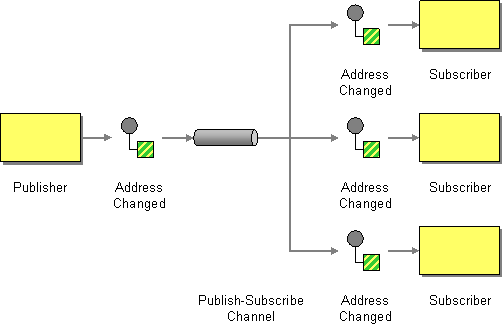
The following Fuse Mediation Router components support the publish-subscribe channel pattern:
In JMS, a publish-subscribe channel is represented by a topic.
For example, you can specify the endpoint URI for a JMS topic called
StockQuotes as follows:
jms:topic:StockQuotes
See JMS in EIP Component Reference for more details.
In ActiveMQ, a publish-subscribe channel is represented by a topic. For example, you can
specify the endpoint URI for an ActiveMQ topic called StockQuotes, as
follows:
activemq:topic:StockQuotes
See ActiveMQ in EIP Component Reference for more details.
The XMPP (Jabber) component supports the publish-subscribe channel pattern when it is used in the group communication mode. See XMPP in EIP Component Reference for more details.
If you prefer, you can also implement publish-subscribe logic within the Fuse Mediation Router application itself. A simple approach is to define a static subscription list, where the target endpoints are all explicitly listed at the end of the route. However, this approach is not as flexible as a JMS or ActiveMQ topic.
The following Java DSL example shows how to simulate a publish-subscribe channel with a
single publisher, seda:a, and three subscribers, seda:b,
seda:c, and seda:d:
from("seda:a").to("seda:b", "seda:c", "seda:d");![[Note]](imagesdb/note.gif) | Note |
|---|---|
This only works for the InOnly message exchange pattern. |
 |  |  |
 |

